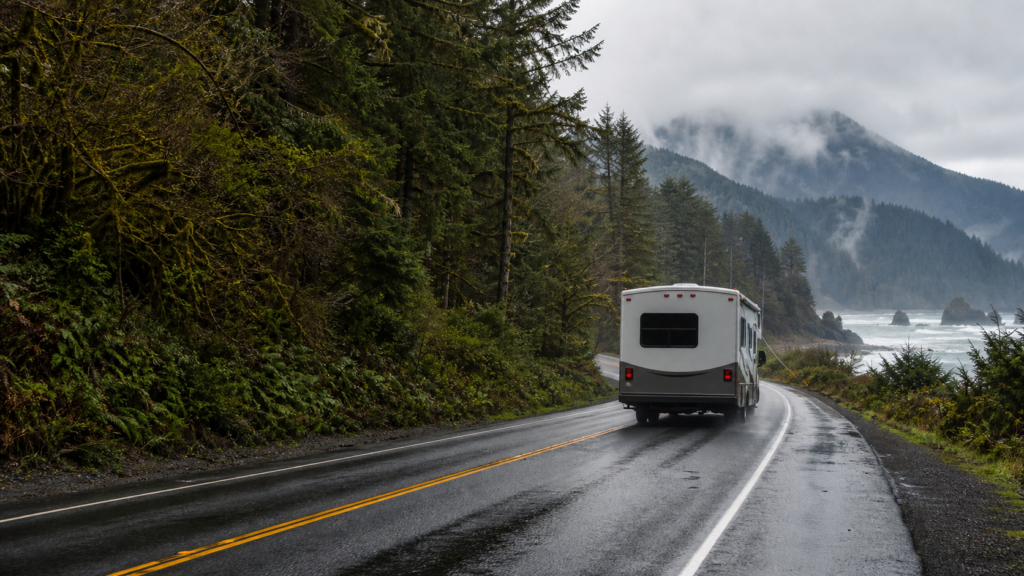
Olympic National Park RV Trip Planner: Campgrounds, Highway 101 Routing, Hoh Rain Forest Parking, and RV-Safe Peninsula Strategy
Planned as an Olympic Peninsula trip and not a typical drive-through National Park, Olympic National Park can be one of the best RV trips in the Pacific Northwest. The error lies in seeing a map, a big green park and deciding you can roll from mountains to rainforest to coast in one unbroken motion. This is not the way it works in Olympic.
The park is divided into several areas and individual entrance roads to each area lead from the outer areas into the park. Access decisions are needed for each of the following areas: Hurricane Ridge, Lake Crescent, Sol Duc, the Hoh Rain Forest, Kalaloch, Mora, Rialto Beach, and the Quinault side. Highway 101 is the planning spine, and the campground you select defines the level of relaxation or pain.
This Olympic National Park RV trip planner is designed to accommodate the true nature of RV travel: rig length, daylight upon arrival, wet pavement, full parking lots, dump stations, ferry options, and the all-important question every driver asks before heading down a park road: Can I get my rig out of this place?
Is Olympic National Park RV Friendly?
The answer in a nutshell: Olympic National Park is RV friendly with planning, it is not universally big-rig friendly.
Campervans, truck campers, and smaller class B or C vehicles are best suited as they can take advantage of more day-use parking and make more flexible plans. The best way to use travel trailers and fifth wheels are as basecamp equipment: set up, unhook, and explore with the tow vehicle. Even large Class A motorhomes and long combinations can have a great Olympic Peninsula RV trip, but this requires conservative campground selection, early arrival and backup plans outside the park.
The most basic of all the rules is simple: don’t book a campsite until you know what region it’s for. Hurricane Ridge is not easy, even at a legal RV site near the coast. The Hoh Rain Forest is not something you can easily do on a late afternoon errand from a north-side base near Port Angeles. Olympic is an upside down campground where the traveler has the opportunity to select the campground second and the loop first.
The Olympic is unlike any other national park road trip.
Olympic isn’t one pretty road through a park. NPS summer guidance notes that destinations in the park are on the various parts of the peninsula and that no roads cross the park interior. That is important in an RV because every access road that is dead end is a choice of how much longer or shorter the vehicle is or whether or not the driver feels comfortable turning.
The park also combines very diverse driving conditions. Urban style traffic around Port Angeles, narrow mountain access near Hurricane Ridge, damp rainforest roads near Hoh, coastal wind/salt air near Kalaloch and remote-service gaps on the west side. It’s that variety that makes Olympic special, but it’s also the bane of overpacked itineraries.
The RoadReviewer Rule: Book the Campsite After the Peninsula Loop is Built.
Before booking Olympic National Park RV camping, figure out what kind of trip you are going on:
- North side trip: Port Angeles, Hurricane Ridge, Lake Crescent and perhaps, Sol Duc.
- West side trip: Forks, Hoh Rain Forest, Mora, Rialto Beach, and other coastal areas.
- Coastal trip: Kalaloch, Ruby Beach, South Beach and a slower route off of Highway 101 to Oregon.
- Full-loop trip: an Olympic Peninsula road trip RV trip that covers Highway 101 as the outer loop.
With that removed from the equation, it will be easier to assess how well your campground fits.
Highway 101 Olympic Peninsula RV Route Strategy
Highway 101 is the primary Olympic National Park RV route, as it encircles the peninsula and links up with the most convenient service areas: Sequim, Port Angeles, Lake Crescent, Forks, Hoh access area, Kalaloch, Lake Quinault, Aberdeen, and beyond. The majority of park roads do not traverse the centre of the park but are rather an extension of this loop.
That is to say, you need to think in terms of segments, not attractions. Port Angeles to Lake Crescent and Sol Duc would be a good travel day. Another could be Forks to Hoh and back. Another could be Kalaloch to Ruby Beach and a southbound off-ramp. Mileage will be one challenge if you attempt to fit in Hurricane Ridge, Hoh Rain Forest, and Kalaloch into one RV day. It is parking time, fuel, dump needs, rain and fatigue that are the real constraints.
The peninsula loop has been built clockwise or counterclockwise.
There’s no one particular direction to aim at, for every rig.
For those coming from Seattle, Tacoma or eastside of Puget Sound who wish to begin in Port Angeles and travel to Hurricane Ridge, Lake Crescent, Sol Duc then on to Forks and the coast, a clockwise loop may make sense. A counterclockwise route is well-suited if you are traveling from Olympia, Aberdeen, the Oregon coast, or a broader Pacific Northwest RV road trip and wish to visit Kalaloch or Quinault first.
If you’re running a bigger rig, the direction is typically the one that has daylight arriving at campgrounds, established fueling areas, and less late day decision making. Don’t select direction based on a scenic preference. Select it based on where you can safely arrive, level, hook up and recover.
Ferry Strategy vs. Driving Around Puget Sound
Ferries are handy, particularly for smaller rigs coming into the peninsula from the Seattle area, but not a whimsical thought for RVs. The cost of Washington State Ferries varies by vehicle size and WSDOT says that reservations are available on only some routes, such as Port Townsend/Coupeville and Anacortes/San Juan Islands. Extra planning may need to be done for oversized or unusual vehicles.
When planning a ferry, determine length, height, width, propane restrictions, fare class, route schedule and vehicle reservation requirements or recommendations. If you’re driving a long trailer or large motorhome, weigh the ferry option against just driving around Puget Sound. The scenic short cut may not be the easiest RV move.
This course covers fuel, groceries, dump stations and cell-service planning.
Think about Port Angeles, Sequim, Forks, Aberdeen and others as logistics stops, not just “pass through” names. Fill up before taking up the idea of days on the west coast or on the coast. If you arrive late to the campground, purchase groceries before you get here. Don’t assume that a national park campground is equipped with dump and water facilities.
Forested valleys, coastal pockets and mountainous regions may have poor cell coverage. Download maps, confirmation of campgrounds, ferry information, and NPS condition pages before you lose cell phone coverage.
The best strategy for the Olympic National Park campground is to be prepared at all times.
Olympic National Park’s best campground is the one that corresponds to the section of the park you intend to visit and the size of your rig. It may seem self-explanatory, but until you’re looking at a campsite and you’re told that it is technically open to RVs, but you are two regions from tomorrow’s plans, it’s not.
Camp first, sightsee second. Arrive in daylight. Before committing the final backing angle, walk the site to evaluate it. Be aware of the location of the dump station or lack of dump station. Then, construct the sightseeing day around the basecamp.
Kalaloch Campground is an RV Coastal Access Point.
Most of the planning for Kalaloch campground RV is coastal pacing. This is a good foundation for beach vacation, Ruby Beach, movement along Highway 101 or an RV trip down the Pacific Coast Highway to Oregon. As of the last update to the NPS camping page on June 9, 2026, Kalaloch is open all year, and available for reservations May 15 through September 20, 2026; it lists 170 sites, a dump station fee, and the RV sites are about 21 feet in length with a few extending up to 35 feet.
That is not a “big-rig” fix all. Coastal campgrounds may seem cramped when they’re wet, filled, or busy, and a site length on paper doesn’t necessarily consider tow vehicles, slide out, tail swing, or driver comfort. For bigger rigs, use Kalaloch as a place to use a measured base, but not for improvisation and dark.
Hoh Campground is the Rain Forest Access.
Hoh Rain Forest RV Camping is appealing because of the proximity to one of the park’s signature areas. The problem is it’s a popular, wet Hoh and accessible by a dedicated access road. At the same NPS camping page, Hoh Rain Forest Campground has the following information: Open Year-Round, Reservations required from June 12 to September 8, 2026, 78 sites, potable water, flush toilets, but no dump station; RV site guidance: 21 feet with a few sites at 35 feet.
Hoh can be a memorable base for a van or compact Class C. If it’s a bigger trailer or if it’s a big class A, I would look at it very closely and consider getting closer to Forks or another base on the west side and making early visits with a smaller vehicle. This is not simply about overnight accommodation; it is about not creating an overnight parking issue in the most popular rainforest destination.
Sol Duc and Lake Crescent / Fairholme Area Planning
Lake Crescent RV camping, and Sol Duc campground RV planning, are for the north and northwest side of the park. Fairholme is the old fashioned campground in the Lake Crescent area. NPS wrote that Fairholme will be open 25 April to 29 September 2026, with reservations available from 15 May to 29 September 2026, a dump station, and RV sites are generally around 21 feet, up to 35 feet.
Sol Duc provides access to the Sol Duc Valley and provides a decent link between Lake Crescent and Forks. NPS announced that Sol Duc Hot Springs RV Park & Campground will be open for season in 2026 with reservations accepting from March 20 through November 1, 2026. The campground side is a shorter fit with a few larger sites and the RV Park has 17 back in RV sites, hookups and vehicle fit from 26 to 36 feet.
These north/west bases come in handy if you’re planning to include the following destinations: Lake Crescent, Marymere Falls, Sol Duc, Port Angeles resupply, and later transfer to Forks.
Heart O’ the Hills and Port Angeles Basecamp Strategy
Heart O’ the Hills is the base for RV camping near Hurricane Ridge. NPS notes that it is open all year, self registration is first come-first served, there are flush toilets, potable water, no dump station, sites for 21 feet, and a couple of sites for 35 feet. It is located below Hurricane Ridge access road and south of Port Angeles.
Port Angeles (or a local private RV park) might be a more convenient option for many RV travelers than attempting to squeeze a larger rig into a national park campground. Staying outside the park may be the better Olympic National Park big rig RV idea, if you require hookups, laundry, easier service access or a more convenient parking day.
When to Stay Outside the Park
Stay outside the park when your rig needs hookups, when your campsite options are too short, when you want a tow-vehicle day to Hoh or Hurricane Ridge, or when weather makes dry camping less comfortable. If you are traveling with pets, working remotely, or have a need for a dump/water schedule, RV parks near Port Angeles, Sequim, Forks, and the coastal approaches can also help alleviate stress.
Inside-the-park camping is all about proximity and ambiance. Out of the park camping is all about services and maneuvering room. Choose the one that will address the problem you’re having.
Hoh Rain Forest RV Parking and Access
Planning for Hoh Rain Forest RV parking is essential to an early day. According to the NPS summer guidance, Hurricane Ridge and the Hoh Rain Forest are very popular in the summer and parking lots may be full, with vehicles being held on the entry roads until vehicles exit the area. According to the same page, the Hoh parking area fills up by 10 a.m. during the busier summer season and is metered from the entrance station.
That translates to midday confidence at a high cost for RV travelers. If you are driving a large motorhome, towing a trailer, or using a basecamp/unhook plan, arrive early or visit later in the day where appropriate.
Knowing when it is time to remove the trailer before a visit is essential.
When towing, be cautious about towing the trailer into a popular day use area. Many times the best option is to camp up near Forks, Hoh, Mora or Kalaloch, unhook and go into the rainforest with the tow vehicle. That provides you with increased parking choice and plan a better exit when the road is congested or the weather turns bad.
Please consult the Olympic National Park road conditions, construction notices, parking directives and weather forecast before driving in on Upper Hoh Road. As of July 2, 2026, Upper Hoh Road was listed as open on the NPS current road conditions page, and the road-line status was last updated on May 5, 2026, with a description stating that Upper Hoh Road is an 18-mile paved road off Highway 101. This is the type of condition that can shift with storms, construction, and/or flood effects.
Caution should be used when approaching Hurricane Ridge and Mountain-Road.
Is it possible to drive an RV to Hurricane Ridge? Occasionally, with the appropriate rig, timing, weather and confidence. Hurricane Ridge, however, is not a routine big rig tour.
According to NPS guidance, Hurricane Ridge Road is subject to closure at a moment’s notice due to weather conditions and to check for alerts or call the road and weather line. According to the current road-conditions page on the road, Hurricane Ridge Road is a 17-mile paved road open, with the road-line last updated May 4, 2026, and the same disclaimer stating road conditions and weather may change.
If you do have a smaller vehicle, the safer bet is to stay at the base of the range which would be near Port Angeles or Heart O’ the Hills and then head into the range earlier in the day. If you’re traveling with just the motorhome, find out what the road conditions are the day you’re getting in, steer clear of the busiest parking times, and be ready to make a Lake Crescent, Port Angeles or lower elevation trip.
Avoid these roads with RVs and trailers.
Not all of the Olympic roads are even just not convenient, some of the NPS lists them as unsuitable or not recommended for RVs.
No RV or trailers on Deer Park Road. NPS reads gravel, narrow, winding, blind corners and limited pullouts and not suitable for RVs or trailers. The Obstruction Point Road is also marked as “Not suitable for RVs or trailers”, gravel with narrow, winding and steep roads. Hurricane Hill Road is listed as not suitable for RVs or trailers as well. NPS also mentions 2026 construction impacts in the Hurricane Ridge area, such as Hurricane Hill Road closing every weekday until July 2 and construction-related parking, trail, and service impacts in July and August.
Be careful of roads to the west and southwest as well. NPS notes the following: Lower Queets Road is not recommended for RVs and trailers; Upper Queets Road is not recommended for large RVs and trailers; South Shore Quinault Road is partially closed due to washout; Graves Creek Road is closed to RVs and trailers; and North Fork Quinault Road is not recommended for RVs and trailers. A generic GPS route is not to be relied upon in these locations.
Coastal, Lakeside or Rainforest Zone Stops for Different Rig Size
Olympic is flexible, but not easy for campervans or small Class B/Class C applications. More parking and timing adjustments and more campground space can be provided, but still official-condition checks and early starts are needed at Hoh and Hurricane Ridge.
The basecamp/unhook solution is the cleanest of the bunch for travel trailers and fifth wheels. Utilize the trailer, not all scenic access roads. Be prepared with the tow vehicle for Hoh, Hurricane Ridge and Lake Crescent trailheads, Mora, Rialto Beach and busy coastal stops.
If you are driving a large class A motorhome or big rig, book a place at the gateway bases, arrive early, stay on a measured site and make conservative day-use decisions. While Olympic can still make for a worthwhile journey, you shouldn’t write off every named stop as a big-rig friendly place. A good large rig RV trip to the Olympic Peninsula is often a good perimeter trip with select smaller vehicle adventures.
Best Time to Visit Olympic National Park in an RV
The summer season offers the widest access, as well as the most campsite options, but is also the time of the year with the highest parking pressure. NPS particularly cautions that Hurricane Ridge and Hoh Rain Forest are “crowded” during peak times, particularly summer and holiday weekends. Arrive at the time of the day when you visit in the months June, July, August or in a holiday window.
For flexible travelers willing to embrace the rain, shorter days and varying road conditions, spring and fall may be great times to get on the road in an RV. While you may find quieter campgrounds and cooler travel days, don’t expect to find all roads, campgrounds and concession services operating as they do during peak seasons.
A winter journey is a different trip. The route can change rapidly due to storms, snow, road closures, campground changes and/or limited services. Same day NPS road/weather checks are imperative when driving RVs in winter.
Here is a suggested Olympic RV Itinerary for 3-5 days.
Arrive and set up in Port Angeles/Lake Crescent.
Arrive in daylight. Depending on your rig and reservation, base yourself in Port Angeles, Sequim, Heart O’ the Hills, Fairholme, Log Cabin Resort or other north side locations. Don’t “squeeze” Hurricane Ridge into a late arrival day. Check the fit of campsite, water, dump and the road status on the following morning.
Day 2 is Hurricane Ridge Day or Lake Crescent Day.
Go early or use smaller vehicle if Hurricane Ridge Road is open and the weather is cooperating. When parking or weather conditions appear to be dicey, turn onto one of these trails: Lake Crescent, Marymere Falls, Spruce Railroad Trail access, or a Port Angeles resupply day. The more acceptable the backup, the better Olympic planning can work.
Day 3 is dedicated to transferring to Sol Duc / Forks Basecamp, or Rainforest Basecamp.
Go West with the realistic expectations. If it’s on your route and within your reservation, Sol Duc is a good stop. If not, move to Forks or Hoh or move to another west side base. Fuel up before you need fuel. Do not reach any forested camping site late at night with a “beat up” spotter and cloudy mirrors.
This day is devoted to Hoh Rain Forest and Coastal Stops.
Get an early start to Hoh Rain Forest, particularly in the summer. When towing, disconnect if possible prior to visit. Beyond Hoh, opt for a pared-down coastal plan, rather than a forced checklist. Access to Mora and Rialto Beach should be verified with current construction and parking directives. Per the NPS current road conditions page as of July 2, 2026, Rialto Beach will not be accessible via Mora Road from July 8 to October 15, 2026 due to work going on outside of Mora Campground on Mora Road. Depending on your lodging, Kalaloch or Ruby Beach may be a better choice.
Day 5: Kalaloch, Ruby Beach or Exit Toward Oregon / Pacific Coast Highway.
Coastal base/exit point Kalaloch. If you are continuing south with your overall trip, this is the natural transition to a Pacific Coast Highway RV Trip Planner trip. Make the day easy: beach time, dump/water, shopping for groceries, fuel, and a realistic path to your next Washington national park RV trip segment: Aberdeen, Oregon.
There are a number of common Olympic RV planning mistakes.
The first wrong move is to see Olympic as a one-shot drive through the park. It is a peninsula road with its own access roads.
The second is to reserve a campsite without learning about the area it’s for. For example, a campground may be considered legal for your RV, but it might be an awful location for your plan.
The third is being late and having a large RV at Hoh or Hurricane Ridge. “Then, it is no longer a scenic value. Parking, metering, turnaround room, and driver stress.
The fourth is to presume that all named roads in parks are RV-safe. Several Queets/Quinault roads, Deer Park, Obstruction Point, and Hurricane Hill should be approached with special care or avoided due to current NPS guidance.
The fifth is overlooking closures, seasonal storms and rain. Olympic is beautiful for being wet, wild and mountainous. Official condition checks are part of the ride, not the final detail, and those same qualities make them so.
Olympic RV Planning Checklist
Before you book an Olympic National Park RV trip, check these out:
- RV length, trailer length, total combination length, height and width, tail swing and ground clearance.
- Match campground to region (north side, west side, coast, rainforest or full loop).
- Review NPS alerts, road conditions, campgrounds, and other listings on Recreation.gov.
- If taking a ferry, check the Washington State Ferries rules, fares, dimensions and reservations.
- Monitor WSDOT and road conditions for state highways, coastal detours and storm impacts.
- Develop a backup overnight plan in a gateway community.
- Check in to camp during the day, if at all possible.
- Do not tow into congested day use areas, where a basecamp/unhook plan is available.
- Keep Hoh and Hurricane Ridge flexible in summer.
- Do not rely on a generic GPS route in preference to the official guidance given on park roads.
FAQ
Is an RV available for Olympic National Park?
Yes, it is possible to use an RV to get to Olympic National Park, but the journey will require some planning depending on the size of your rig. The smaller rigs are the easiest to get along with. Use measured campgrounds, early arrival timing, and basecamp strategies in use of larger motorhomes, fifth wheels, and travel trailers.
Is Olympic National Park an RV friendly park?
Olympic is conditionally RV friendly. Highway 101, gateway towns and a few campgrounds are good for RV travelers, but some park roads are not suitable for RVs/Trailers and popular parking areas fill up early.
Best RV campground in Olympic National Park.
No one campground is best. Kalaloch is good for trips to the coast, Hoh for rain forest access, Fairholme and Sol Duc for planning trips to Lake Crescent/Sol Duc, and Heart O’ the Hills for access to Hurricane Ridge. The one which suits you is the best option.
Do large RVs fit at Hoh Rain Forest?
While large RVs can visit with careful timing and current-condition checks, RV parking is limited during busy times at Hoh Rain Forest. If visiting during summer, allow for early entry, later day visits or basecamp/unhook.
Is it possible to drive to the Hurricane Ridge from an RV?
Large-rig drivers should take precautions when on Hurricane Ridge Road as some RVs are able to access this road when it is open and conditions are favorable. Verify same day NPS road conditions, weather, steer clear of peak parking times, and use a smaller vehicle or mode of transportation when feasible in and out of Port Angeles.
What about hookup facilities in the Olympic National Park?
Few NPS campgrounds have hookups. Sol Duc Hot Springs RV Park is the key in-park/concession RV hookup facility identified by NPS for Sol Duc Park RV sites. Check the availability of services at the time of booking.
How to travel the best around Olympic National Park in an RV?
Typically, the best way is a Highway 101 based loop or part loop that is best suited for your starting point. On the north side use Port Angeles/Lake Crescent; on the rainforest and west side use Forks/Hoh; and on the coast and south side use Kalaloch/Quinault.
How many days do you need for an Olympic National Park RV trip?
One or two regions will be covered in three days. A minimum of four to five days is a more realistic time frame for a practical RV loop that covers the north side, rainforest, and coast, but without being too onerous.
Is there a place to camp with an RV close to Lake Crescent or Sol Duc?
Yes, to a certain degree, site fit and services vary. Fairholme is located to service the Lake Crescent area and Sol Duc Hot Springs RV Park & Campground is located to service the Sol Duc Valley. Please check the availability of the dates, length and services before making a booking.
What roads should RVs or trailers not use in the Olympic National Park?
Don’t use Deer Park Road, Obstruction Point Road or Hurricane Hill Road with RVs or trailers, according to the current language on the NPS’s road-condition report. Be sure to read the descriptions of Queets, Quinault, Graves Creek and other lesser-known roads as some are not recommended or do not accept RVs and trailers.