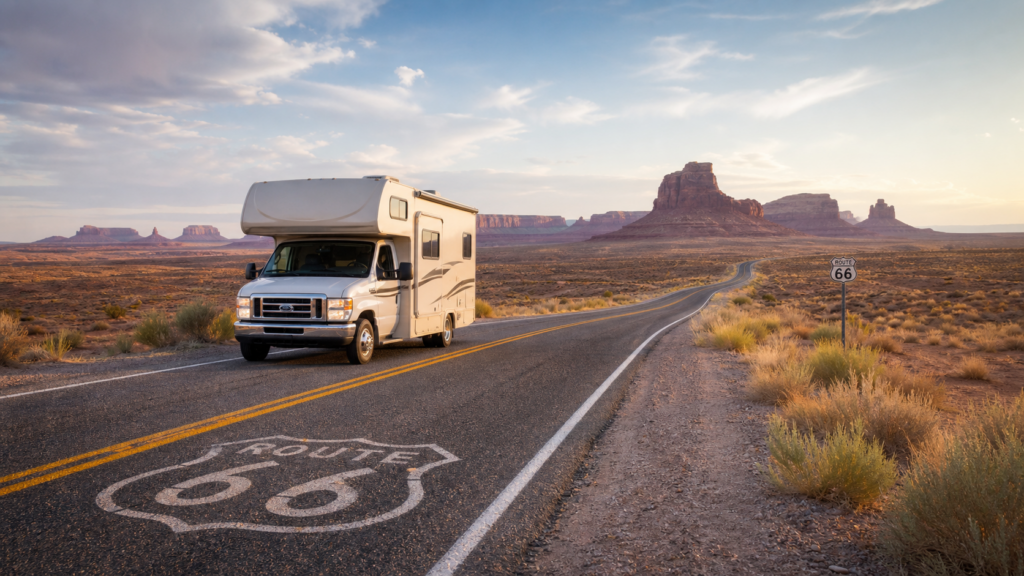
Route 66 RV Trip Planner: Campgrounds, Big-Rig Routing, and Safe Mother Road Itinerary
Route 66 can make even the most practical of travelers sentimental. The neon, old motels, small town diners, desert horizons and Chicago-to-Santa-Monica mythology are indeed authentic elements to the charm. But the Mother Road requires more than nostalgia in an RV. It requires a route plan that takes into account height, length, heat, campground access, city traffic, fuel range, and the difference between a pretty old alignment and a road that your rig should take!
This Route 66 RV trip planner assumes you desire the classic experience, however you don’t wish to be pressured to make car-sized choices for your motorhome, fifth wheel, travel trailer, or campervan. Use it to create a Route 66 RV road trip by region, determining when to follow the historic pavement, opting for safer interstate connectors and planning campground stops that are still usable if the weather or construction or fatigue changes the day.
The Need for RV-Specific Planning on Route 66
Historic Route 66 Isn’t One Solid Modern Roadway
According to the National Park Service, Route 66 was officially "begun" in 1926 when the federal highway system began. It also points out that this was not a single new highway, but was constructed from existing local, state and national roads. That’s important to RV Route 66 planning.
Historic Route 66 is a historic route, not a modern ‘RV’ highway with uniform shoulders, clearances, lanes, services, or pavement. Today’s traveler is really choosing among historic alignments, signed tourist routes, modern highways, local streets, and RV-safe detours on the classic corridor that stretches about 2,400 miles across eight states from Chicago toward Los Angeles and Santa Monica.
The Main RV Challenges: Distance, Old Alignments, City Traffic, Desert Heat, and Campground Fit
But the tough bits of a RV trip down Route 66 don’t always take place in show-stoppers. Many times it’s a combination of everyday issues: a long drive day, a limited fuel stop, an evening arrival at a campground, a hot desert afternoon and a GPS that assumes that your trailer can turn like a car.
From the beginning, plan for these issues:
- Historic alignments which may be narrow, rough, locally maintained, bypassed, or discontinuous.
- Urban segments in Chicago, St. Louis, Tulsa, Oklahoma City, Albuquerque, Los Angeles, and smaller downtowns.
- Desert areas with varying levels of risk from heat, wind, grades, and limited services.
- Campgrounds and Route 66 RV parks that might be appropriate for a campervan, but need careful length checks for large rigs.
- Older bridges, low trees, sharp turns, railroad underpasses, and city parking that can affect a Route 66 travel trailer route.
When the Interstate Is the Smarter RV Choice
Here’s the bottom line to any good historic Route 66 RV guide: It’s not a failure to use I-55, I-44, I-40 or another modern route. It can be the right RV move at times.
If the historic section is rough, poorly marked, narrow, exposed to the heat, under construction, or too short for your total combination length, take the modern road and explore the old towns with the towed car, rideshare, or in a short van excursion. The objective isn’t to prove that every mile can be done in an RV. The objective is to get the rig there with no damage and the driver still fresh enough to enjoy the stop.
Quick Answer: Can You Drive Route 66 in an RV?
Yes, you can travel Route 66 by RV, but not all RVs should take all historic routes. Think of the trip as a corridor, rather than a line. Create a Route 66 safe RV route from sections that are confirmed, modern connectors, campground bases and backup.
Best Fit: Campervans, Class B Vans, Small Class C Motorhomes, and Short Trailers
Campervans, Class B vans, shorter Class C motorhomes, truck campers, and short trailers have the easiest time. They will be able to accommodate additional parking at older fuel stops, small RV parks, downtown parking, museum parking, scenic parking, and roadside attractions. They also help to make spontaneous detours less stressful.
Additional Caution: Large Class A Motorhomes, Fifth Wheels, and Long Towed Setups
There is a need to have a more selective Route 66 big rig route for large Class A motorhomes, tall fifth wheels, long travel trailers, and motorhomes towing cars. Check actual loaded height, overall length and turning requirements prior to departure. Then, adopt some of the classic setups without the complete rig.
Why Big Rigs Should Consider Park-and-Explore Days
For larger rigs, it may be best to camp outside the area and explore in a smaller car. Avoid major cities, popular tourist centers and old mountain areas. This will leave your home base simple enough to enjoy the neon signs, museums, diners, murals and original pavement that make the Mother Road RV trip worth it.
How Long Will a Trip on Route 66 in an RV Take?
7 Days: Choose One Region, Not the Whole Route
Seven days isn’t enough time for a leisurely journey from Chicago to Santa Monica. Select a region: Illinois and Missouri, Oklahoma and Texas, or a Southwest focus on New Mexico, Arizona and California. By having a plan for your area, you can make the most of the route, rather than just focusing on the miles.
14 Days: Fast Full-Route RV Itinerary With Selective Stops
A 2 week tour of Route 66 can get you from Chicago to Santa Monica, but it will move quickly any RV. Please accept selective historic portions, several interstate days, early arrival of campgrounds if possible and limited 2 night stay. This is best suited for smaller rigs and more advanced drivers who are okay with frequent driving.
21 Days or More: The Better Full Mother Road Pace
The better pace for the full route is a 3 week road trip on Route 66. It offers more two night stops, weather buffers, laundry and dump station days, city staging and side trips to Santa Fe, Petrified Forest, Flagstaff, Williams or the Grand Canyon area.
Why RV Drive Days Should Be Shorter Than Car Drive Days
RV miles are slower as fueling and parking, backing up, sightseeing, and campground setup are all slower. A practical Route 66 road trip planner will have plenty of travel days in the 150-mile to 250-mile range, then reduce them further when they happen to go near cities, desert heat, mountain grades or towns that they must see.
Route 66 RV Route Overview by State
Illinois: Chicago Start, Suburban Traffic, and Early Route 66 Towns
While it’s symbolic, the starting point is Chicago, which for me isn’t the ideal place to improvise with a long trailer. Try staging outside the city, check out the start marker downtown and then work your way southwest through classic Illinois towns. The key RV issues are suburban traffic and parking.
Missouri: Rolling Roads, Older Alignments, and Ozark Detours
Missouri offers up St. Louis, rolling hills, antiquated courses, and Ozark-inspired diversions. Adopt modern connectors when the old route is less desirable due to city traffic or narrow roads or weather. Access to campgrounds may be simpler away from the urban centres.
Kansas: Short Segment, Historic Stops, and Easy Pacing
Kansas’ stretch of Route 66 is relatively brief, perfect for a leisurely day. Don’t take a short mileage for granted. Short RV days are great for getting groceries and fuel, and for a break before some more Oklahoma miles.
Oklahoma: Long Route 66 Mileage and Small-Town Stops
There is a considerable amount of Route 66 identity and mileage in Oklahoma. There are lots of small town stops, museums, bridges and alignments to be assessed. The name of the game for RV travelers is to decide which towns are worth stopping at and which are better as a "drive-through."
Texas: Panhandle Winds, Amarillo, and the Midpoint
Strong winds, open exposure, and rapidly shifting conditions are potential threats in the Texas Panhandle. Amarillo and the midpoint area are natural anchors. Be aware of fuel access, crosswinds and campground approach roads, particularly if you have a high-profile trailer or class A.
New Mexico: Albuquerque, Santa Fe Options, Elevation, and Desert Weather
Elevation, desert weather, Albuquerque traffic and the option of Santa Fe routing (depending on how much historic alignment you are looking for) is added in New Mexico. The day can be influenced by heat, wind and sudden storms. Leave plenty of room to pull out.
Arizona: Petrified Forest, Winslow, Flagstaff, Williams, and Grand Canyon Side Trip Planning
Arizona offers quite a few attractions that many RV travelers want to visit: Petrified Forest, Winslow, Flagstaff, Williams and access to Grand Canyon all vie for attention. Cooler temperatures and winter weather risk may occur at higher elevations around Flagstaff and Williams. Reservations are required at the early access points to the Grand Canyon; site lengths must be checked.
California: Mojave Desert, Mountain Grades, Los Angeles Traffic, and Santa Monica Finish
California requires the greatest patience. Los Angeles traffic, hot and service-limited Mojave and mountain & pass sections all call for respect of a large rig. Many RV travelers should park outside of the most densely populated areas and visit Santa Monica without the RV.
Historic Alignments vs. RV-Safe Routing
How to Decide When to Follow Historic Route 66
When the pavement, the lane width, the clearance, services, weather and your rig are all appropriate, follow a historic alignment. You can be more flexible if you’re driving a small van. If you are towing 35 feet behind a pickup, make this decision ahead of time and allow room to turn.
When to Use I-55, I-44, I-40, or Other Modern Connectors
When the historic route becomes confusing, slow, rough, isolated or too urban for your set-up, use modern connectors. When you’re wandering through the signed Route 66 towns, I-40 is often a sensible RV route backbone in the West, and I-44 provides a backbone through Missouri and Oklahoma.
Rough, Narrow, or Isolated Segments to Research Before Driving
Check the pavement and bridge conditions and any known low clearance or seasonal closings, and if possible, check with other travelers before making a commitment to an older segment. Then check back with official sources to the extent possible. Some areas are lovely on the map, but are better as short car or van side trips.
Do Not Let a Car GPS Pick Your RV Detours
There’s a need for generic navigation. Use a route tool designed for RVs, official state DOT road condition pages, campground directions, the satellite view and paper and offline backups. RoadReviewer has a complete RV-safe route planning guide for a deeper workflow.
Big-Rig Route 66 Cautions
Low Clearances, Old Bridges, and Tight Urban Streets
Route 66 low clearance risk is generally limited to a local area and not across a corridor. This could be due to an old underpass, tree canopy, railroad bridge, downtown turn or fuel canopy. Check the correct height and prevent pressure guessing.
Oatman, Mountain Roads, and Steep/Curvy Segments
Older mountain or curvy stretches, like Oatman, are typical examples of where big rigs need to study up before they drive. If the road becomes questionable due to width, grades, switchbacks, animals, crowds or parking, park your RV elsewhere and visit in a smaller vehicle.
Hot Weather, Long Distances, and Low Service Levels
When it comes to desert driving for Route 66, getting up early, judicious fuel planning, knowledge of tire pressure, water, shade strategy and engine-temperature awareness are all important. Problems turn into trip stop problems in no time at all when it’s hot outside.
Why Towed Cars Can Make Route 66 Easier
If your campground bases are well selected, a towed car can make this trip much easier. Apply it to narrow downtowns, historic downtowns, museums, diners, and the Santa Monica finish. Simply keep in mind that being towed extends travel day length and turning requirements.
Route 66 Campground Strategy for RV Travelers
Book Early Near Chicago, Flagstaff/Williams, Grand Canyon Access, and Santa Monica/Los Angeles
Not all Route 66 campgrounds or Route 66 RV parks are created equal for convenience or fit of big rigs. Reservations are needed close to cities, Flagstaff/Williams, access to the Grand Canyon and end at the Los Angeles/Santa Monica end. These are not areas for late day’s luck.
Take Advantage of RV Parks Outside Busy Cities and Day-Trip In
The simplest plan for a Route 66 campground is likely not in the heart of the busiest town. Pick an RV park that’s easier to access, day trip in. This can be particularly helpful in the Chicago, St. Louis, Albuquerque, and Los Angeles areas.
Confirm Site Length, Hookups, Dump Stations, Shade, and Generator Rules
Don’t settle for "RV friendly." Check out the site length, total vehicle length, hookups, dump station availability, condition of bathhouse, shade, pet policies, generator policies, check-in hours and if the approach road is suitable for rigs.
Never Consider Informal Overnight Parking as a Primary Plan
Unfortunately, local regulations, high security concerns, manager discretion, or full lots may cause informal overnight parking to cease. Use it as a backup with the assurance it is legal and safe. A Route 66 RV camping plan should include something more than just nights at rest stops.
Sample Route 66 RV Itineraries
7-Day Southwest Focus: New Mexico, Arizona, and California Highlights
Starting in Albuquerque or Santa Fe, then heading west through Gallup to Petrified Forest, then to Winslow, Flagstaff/Williams, then Kingman, the Mojave and then a staged finish in Los Angeles/Santa Monica. Use one flex day for weather, heat or a trip to the Grand Canyon.
14-Day Full Route: Chicago to Santa Monica With Long Travel Days
Selective historic sections and modern connectors are recommended for a 14-day trip on Route 66 by RV. Major anchors should be planned around Chicago, St. Louis, Tulsa/Oklahoma City, Amarillo, Albuquerque/Santa Fe, Flagstaff/Williams, Kingman and the Los Angeles area. There will be some long days and not much lingering.
21-Day Full Route: Better Pacing, More Two-Night Stops, and Buffer Days
21 days and two nights in more robust RV bases, laundry and dump station days, and buffers around the desert and high country. This one is the one I would recommend for the first-time full-route RV travelers.
Family-Friendly Version With Shorter Drives and Campground Amenities
Families should look for shorter drives, pools or play areas, reliable hookups, laundry, groceries and two-night stays. A family Road trip to see every stop along the Road is not the idea of a Route 66 road trip; it is about making each day on the Road as easy and stress-free for everyone as possible so they want to keep going.
Fuel, Food, Groceries, Dump Stations, and Internet Planning
Plan Fuel Stops Around RV Access, Not Just Price
Access is the beginning of route 66 fuel stop planning. Look at canopy height, pump spacing, driveway slope, exit turn and if you can leave without backing. If your trailer gets stuck at the station, the lowest price per gallon fuel isn’t going to help.
Satellite-Check Gas Stations and Campground Entrances
Small stations, older RV parks and downtown attractions – use satellite view first. Check for railroad crossings, turnarounds, narrow gates, parked cars and trees.
Incorporate Dump Station and Laundry Days Into the Route
Dump stations, water fills, propane, groceries and laundry takes time. Schedule them rather than hope that they will fall in between attractions.
Expect Cell Coverage Gaps in Rural and Desert Areas
Download offline maps, campground confirmation, reservation numbers and state road condition links. The coverage of rural and desert areas can be variable and due to wildfire smoke, storms or closures, sudden changes may be necessary.
The Optimal Time of Year for an RV Trip Along Route 66
Spring: Good Weather but Variable Storms
Spring can be great but beware of potentially bad weather in the Plains, cold snaps at altitude and windy travel days.
Summer: Heat, Crowds, and Desert Stress
It is more of a threat in desert areas during the summer months. Go early, go during the coolest afternoon hours and check the tires and the camp site’s electric service for cooling requirements.
Fall: Often the Best Balance for RV Travel
The fall season can be the ideal combination of temperatures, available campgrounds and a reasonable amount of crowd. However, check weather at altitude and make reservations for popular spots.
Winter: Lower Crowds but Weather and Elevation Risks
While quiet and beautiful, weather and snow and ice, as well as the short days for New Mexico and Arizona, can make winter complicated. Seasonal camp grounds and/or services may be available.
Route 66 RV Planning Checklist
Determine the Length of the Rig and Combination
Note loaded height, width, length overall, weight, fuel range and turning restrictions. Ensure that the numbers are displayed in the cab.
Before Leaving, Select Your Must-Drive Historic Segments
Select the sections of history that are significant and construct the RV-safe route around these. Try not to make all old alignment compulsory.
Save State DOT, Weather, Campground, and Reservation Links
Keep official road-condition pages, weather sites, campground confirmations, reservation sites and emergency contacts by state.
Download Offline Maps and Have a Paper Backup Map
Take offline maps, a paper map or Road Atlas. Having alternates to the romantic route, on a Route 66 RV route map, is most useful.
Create Backup Overnight Stops for Each Travel Day
When planning each travel day, determine a campground, an early stop over and a late stop over alternative. Many bad decisions can be prevented with that one habit.
FAQ
Can You Travel in a Big RV on Route 66?
While it may be possible to navigate the Route 66 corridor in large RVs, not all historic alignments are appropriate. Create a Route 66 big rig tour with contemporary connectors, clearances, campground bases and park/explore days.
How Long Does It Take to Drive Route 66 in an RV?
A rushed full Route 66 RV trip can be done in about two weeks, but three weeks or more is better for most travelers. Seven days is best for one region, not the full Chicago-to-Santa-Monica route.
Is It Possible to Camp Along Route 66?
Yes. Private RV parks, public campgrounds and resort style stops are found on or close to the corridor. Seasonal Status and Road Access still must be checked for Route 66 RV camping, as must Site Length, Hookups, and Dump Stations.
Which Way Should I Go, East or West, on Route 66 in My RV?
Westbound is a straight Chicago-to-Santa-Monica tale, and slowly leads to the desert and ocean conclusion. If it is easier because of weather, where you’re at, or campground availability, eastbound can be a good option. Pick the direction that provides your rig with improved timing in heat, city and high elevation weather.
Is It Possible to Take the Original Route 66 All the Way?
No, not as a single original road as people think. Route 66 evolved, was rerouted in some locations and ultimately was bypassed by interstates. Today you trek along a mixture of historic alignments, signed routes, local roads and modern connectors.
Which RV Size Is Ideal for Route 66?
The smaller rigs are the most versatile. Campervans, Class B vans, shorter trailers and small Class C motorhomes are easiest. However, larger motorhomes and fifth wheels are capable of making a great trip, but they require a bit more planning, detours, and staging away from tight areas.
The Mother Road Works Best When You Slow It Down
Route 66 is the reward for the traveler who has left space in the plan. It’s not always the famous stops that are the best. Sometimes it’s the unobtrusive campground evening, after a breezy Panhandle day, or the choice to miss a cramped old alignment and instead take pleasure in it from a towed car.
Compare this guide to RoadReviewer’s Blue Ridge Parkway RV trip planner and Pacific Coast Highway RV trip planner, or check out RoadReviewer’s routes hub for more RV route planning. The same principle applies on all great roads: it’s just a good road if it’s good for the rig, driver, and location where you’ll stay for the night.