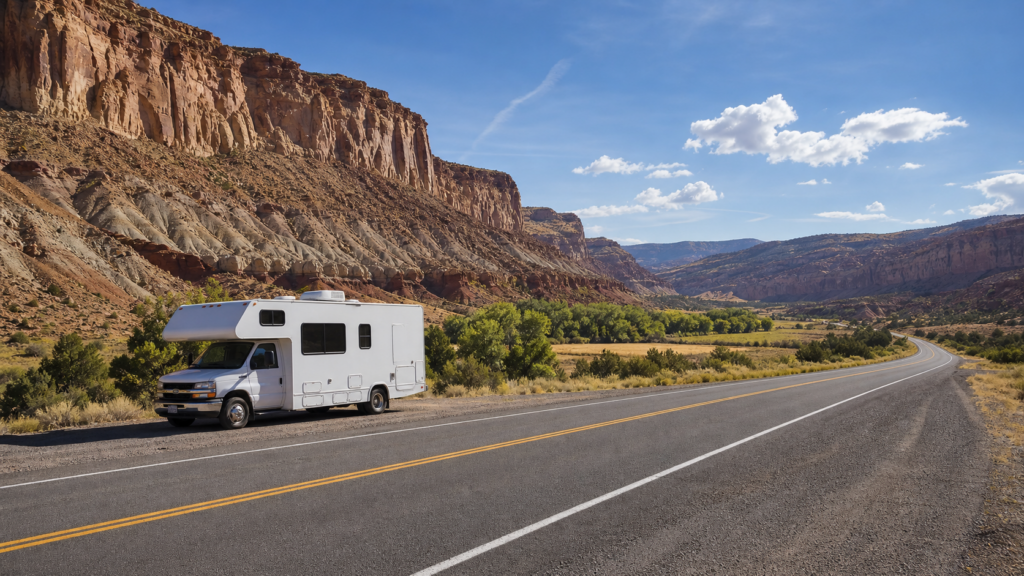
The RV-Safe routes trip planner for Capitol Reef covers Fruita Campground, Scenic Drive, Torrey Basecamps, and more.
When it comes to RVing, one of the most underestimated Utah parks is Capitol Reef. The map shows that it is a fairly straight through Highway 24, Fruita Campground is close to the visitor center, Torrey is close, and the Scenic Drive appears to be an add-on. Unlike a car route app, the journey of a motorhome, fifth wheel, travel trailer, Class C, Class B, truck camper, or campervan hinges on things you might not necessarily consider: overall length, turning room, campground fit, heat, water, dump access, road surface, or flash flood risk.
This Capitol Reef RV trip planner centers around the choices that make the trip practical, such as where to camp, when to make Torrey our basecamp, when the Capitol Reef Scenic Drive RV trip works, and which dirt roads are not part of the standard-RV itinerary. If you’re still in the process of planning out the larger route, use RoadReviewer’s RV-safe route planning guide before committing to mileage.
Why Capitol Reef Needs RV-Specific Planning
Capitol Reef isn’t a laid back stop on an RV tour, but it is quieter than Zion, and less like Arches than Zion. The park features limited services, one developed in-park campground, one main paved corridor and several famous roads that rapidly shift from paved sightseeing to dirt, wash, high clearance, and/or weather-dependent country.
The problems with the main RVs are straightforward: Fruita might not fit every setup, dirt roads can get worse after storms, summer heat is bad for dogs and other pets, and Capitol Reef is often between two larger legs of a Utah Mighty 5 RV tour. In the RoadReviewer rule, the first decision is to make the basecamp decision. With the knowledge of where the rig sleeps, dumps, refills, and cools down, the scenic plan becomes easier.
Quick Answer: Is Capitol Reef RV-Friendly?
Yes, Capitol Reef can be quite RV-friendly if the focus of the trip is on Fruita, Torrey, Highway 24, and on the conservative roads. It will not be RV friendly if you think of it as a campground loop on every scenic road.
It is advantageous for smaller rigs. Campervans, class B vans and truck campers, short class C motorhomes and compact trailers are more convenient to park, fit at Fruita and turn around at the end of a scenic stop. If size is a consideration for larger motorhomes, fifth wheels and long truck-trailer combinations should be more justifiably cautious: check dimensions of sites, get in during the daylight hours, avoid unknown dirt spurs, and consider Torrey Utah RV parks if hookups or easier access is desired.
Fruita Campground RV Strategy
Fruita Campground is the developed campground within Capitol Reef National Park and the most common name that most people hear when they start their research into Capitol Reef National Park RV camping. It’s a lovely location in the Fruita Historic District, near orchards, cliffs and the Visitor’s Center area, as well as adjacent to Highway 24 and the Scenic Drive.
Fruita comes at a cost: not a complete service RV resort. The current official NPS and Recreation.gov pages for this draft report 71 total sites, 65 reservable sites, no first come first served sites, no ordinary utility hookup at any of standard sites, restrooms with running water and flush toilets, RV dump and potable water fill near Loops A and B, and generator restrictions by loop and season. Electrical sites are only identified for required medical devices and are accessible. Check all campground information again prior to publishing as things can change regarding fees, rules, and availability.
The largest problem with the size of the Fruita Campground Capitol Reef RV is fit. NPS campground regulations say there are no pull-throughs, that the majority of the sites in Loops A and B are under 40 feet and the majority of sites in Loop C are 40 to 52 feet. Not all long setups are comfortable, however. Check complete footprint (tow vehicle, hitch, bike rack, rear carrier, slide clearance and backing angle).
Before Booking Fruita, Check These Areas
Check length, tow-vehicle parking, slide clearance, generator loop regulations, tank size, arrival time, noticeboards, and suitability of the shape of your site for the comfort of your backing before booking your campground site at Fruita. Fruita might not be the right tool for the job if you need air conditioning all afternoon, full hookups or laundry, or late arrival.
When You Stop Moving the Rig, Fruita Works Best
Fruita is best with the RV parked and no more parking tests at the various viewpoints. Walk if you can, use a towed vehicle if available and the visitor center as your first stop for up to date road conditions on Capitol Reef. The smaller the amount of movement a large rig has in the core park area, the smoother it goes.
Torrey Basecamp and RV Parks Near Capitol Reef
Torrey is the down-to-earth pressure-release valve to RV camp near Capitol Reef. It may be better to camp at RV parks near Capitol Reef National Park in and around Torrey, if Fruita is too full, too tight, too dry-camping-focused or too uncertain for your setup.
Torrey is particularly good for long fifth wheels, large motorhomes, summer vacation with hookups, laundry days, grocery stops, fueling, propane planning and multi park loops. Also comes in handy if Bryce/Moab is the reset point.
When Torrey Beats Camping Inside the Park
The RV is the limiting factor and Torrey beats Fruita. However, if you’re approaching after dark, or you need 30/50 amp service, or you’re bringing your pets along in the heat of the day, a private RV park might be safer and more convenient than forcing a site within the park.
What to Ask Private RV Parks Before Booking
Inquire about length of site for use, pull through vs back in, amperage, road access, if there is shade, who picks up the trash, if pets are allowed, and if the tow vehicle will fit and not be cramped. Don’t assume that all private RV parks are alike; their size and policies vary.
RV-Safe Routes Into Capitol Reef
For the majority of RV travelers, Capitol Reef routing should be more of a paved-road approach than scenic approach. Use smaller vehicles to clean up questionable dirt. Allow daylight, fuel, weather, and known surfaces to be the first order of business for the RV plan.
Bryce Canyon to Capitol Reef by RV
The Bryce Canyon to Capitol Reef RV route is no mere pretty line through southern Utah, but a real routing decision. Grades, wind, weather, fuel range, brakes, daylight are all important. When traveling from Bryce, use this guide in conjunction with RoadReviewer’s Bryce Canyon RV trip planner and not pile a hard travel day on top of a hard campground arrival.
Moab, Arches, and Canyonlands to Capitol Reef by RV
The other common connector is the Capitol Reef to Moab RV road. Moab is the gateway to Arches and Canyonlands, but can be crowded, hot and reliant on services during peak seasons. Take a break at Capitol Reef before hitting that next basecamp. RoadReviewer’s Arches National Park RV trip planner and Canyonlands National Park RV trip planner are useful for that eastbound leg.
Highway 24 Through Capitol Reef by RV
The trip’s driving force is the Highway 24 Capitol Reef RV planning. This is the primary paved highway through the Fruita area and provides access to the visitor center, petroglyphs, orchards, trailheads and pullouts. However, for long rigs, parking and exit clearance are important factors for stops. What is feasible for a sedan may not be possible for a truck and trailer.
Capitol Reef Scenic Drive RV Advice
The Capitol Reef Scenic Drive is the primary in-park scenic roadway to the south of the visitor center area. It is listed as a 7.9-mile paved road with a dirt spur into Grand Wash and a dirt spur into Capitol Gorge, and listed in the small-rig range on the official NPS road info and 27-foot on the separate NPS Scenic Drive info. That’s not a guessing game, it’s a road to check.
The real question is, do your RV, driver confidence, traffic and daylight align today? Smaller rigs are the easiest to use. If conditions are tight, it is best for larger rigs to use a tow vehicle or not make the drive.
Why Dirt Spurs Need Extra Caution
Decisions for Capitol Gorge Road RV and Grand Wash Road RV should be conservative. Although these dirt or gravel spur roads may be listed as passable under certain conditions, NPS guidance may include smaller RV’s and the experience can change quickly with rain, mud, washboards, ruts, congestion, and turnaround limits. When a location is listed as “Passenger vehicle accessible” it does not necessarily mean that it is “comfortable for my RV.”
Roads and Areas Standard RVs Should Treat Carefully
Cathedral Valley Is Not a Typical RV Scenic Loop
The Cathedral Valley RV Warning in non-engineer speak: RV trips to Cathedral Valley are not like any other RV scenic trip. Official NPS road descriptions point to the need for high clearance for roads in Cathedral Valley, washboard issues, river ford concerns, unknown segments, and worse after weather conditions. It should not be taken as a ‘short cut’ by a standard rental RV, long trailer, low clearance motorhome or heavy fifth wheel.
Flash Floods, Monsoon Storms, and Washboard Roads
Roads in the desert are often rapidly shifting. What may be a good idea in the morning (dry wash) can be a bad idea after a storm. Washboard can cause gear to loosen and tire abuse. The issue with long wheelbases is that they can be caught out where the short high clearance vehicles pass. Before traveling by dirt road, always check the road conditions with the NPS, and use the Utah highway reports when weather or construction is in progress.
A Practical 2- to 4-Day Capitol Reef RV Itinerary
Day 1: Arrive, Set Up, and Check Road Conditions
Arrive in daylight. Arrive at Fruita or a Torrey basecamp and spend the first evening simply visiting the center, reading about campground rules, discussing water and dumping, checking the road conditions and, if it’s feasible, an easy night area stop.
Day 2: Fruita, Highway 24, and Scenic Drive
Day 2 is the main Capitol Reef RV tour: Fruita Historic District, orchards (when open), petroglyph area, viewpoints along Highway 24 and the Scenic Drive (if vehicle and weather conditions permit).
Day 3: Buffer, Services or Short Hikes
Day 3—weather, laundry, groceries, tank service, short hike, 2nd chance at scenic drive. This buffer is the reason that a Utah loop doesn’t turn into a forced march.
Day 4: Connect Toward Bryce, Moab, Arches, or Canyonlands
When traveling westward, link this stop up with RoadReviewer’s Zion RV trip planner and Bryce guide. If you are travelling east, connect it with Arches and Canyonlands. When you take your Southwest loop on the broad path, the Grand Canyon RV trip planner can help keep the large route realistic.
Common Capitol Reef RV Mistakes
Don’t make these common errors:
- Booking Fruita without considering total setup length.
- Assuming each “RV site” is suitable for each RV.
- Arrival after dark for tight back-in site.
- Have continuous hookups at Fruita.
- After-rain driving of dirt spurs.
- Expecting to visit Cathedral Valley as a typical “scenic drive.”
- Not planning for fuel, water, dump and groceries.
- Allowing a car navigation system to select the Capitol Reef RV route.
- Overloading a Utah Mighty 5 RV trip without allowing any buffer.
- Without taking into consideration heat, pets, wind and risk for flash flood.
Quick Capitol Reef RV Planning Checklist
Prior to rolling to Capitol Reef, check the rig height, width, overall length, campground size, hookups or dry camping requirements, generator regulations, fresh water, gray and black tank size, dumping facility, fuel range, propane, grocery chain, pet heat plan, offline maps, weather, NPS road conditions, Utah highway conditions, and backup overnight location.
FAQ
Is it possible to drive an RV to Capitol Reef National Park?
Yes. While it is possible to visit Capitol Reef with an RV, the best trips are based on Highway 24, Fruita or Torrey, road conditions, and realistic rig size.
Which is the best RV campground in Capitol Reef?
Fruita Campground is the primary developed in-park campground and the typical point of origin for Capitol Reef campgrounds RV explorations. Ideally, you’d want your particular location to match your configuration. Torrey may be the preferred choice for bigger rigs or travelers who require hook ups.
Are there any RV hookups at Fruita Campground?
The official pages currently have it that ordinary campsites are not connected to utilities. Recreation.gov only mentions accessible electrical locations for necessary medical equipment. Recheck before publication.
How long can an RV be at Fruita Campground?
There’s no universal safe answer for each rig. No pull-through sites exists and most campgrounds in Loops A and B are less than 40 feet, with the majority of those in Loop C being 40 to 52 feet. Fit is subject to actual site conditions.
Is it possible to drive the Capitol Reef Scenic Drive in RVs?
Some can, particularly smaller rigs in good conditions. NPS Scenic Drive guidance is geared towards the smaller RV not the large motorhome or long truck-trailer combination. Larger rigs need to check with current NPS guidance, traffic, turnaround comfort and use a tow vehicle if available.
Is Cathedral Valley safe for RVs?
Cathedral Valley is isolated and fragile. Standard RVs, long trailers, or low clearance motorhomes don’t normally take this route.
Which is the best route to take to reach Capitol Reef from Bryce Canyon?
The best route will vary based on season, weather, wind, grades, fuel, and rig. Plan for daylight and low-key travel.
Where ought to be the location of big rigs around Capitol Reef?
Depending on the length of time required for use, hookups and services may be more manageable at RV parks located near Capitol Reef National Park, as many big rigs are better suited there, particularly around Torrey.
Final RoadReviewer Advice
Capitol Reef is a place that offers RV travelers an opportunity to take their time and to plan like drivers. The backbone is Highway 24, Fruita is used only if site is right, Torrey is used if rig/weather dictates, and official road conditions are checked before heading onto dirt. Drive carefully on roads that are condition rated such as: Cathedral Valley Road, Capitol Gorge Road, Grand Wash Road. That means that Capitol Reef isn’t just a place where the road finally outpaces the driver, it’s one of the top Utah RV destinations.