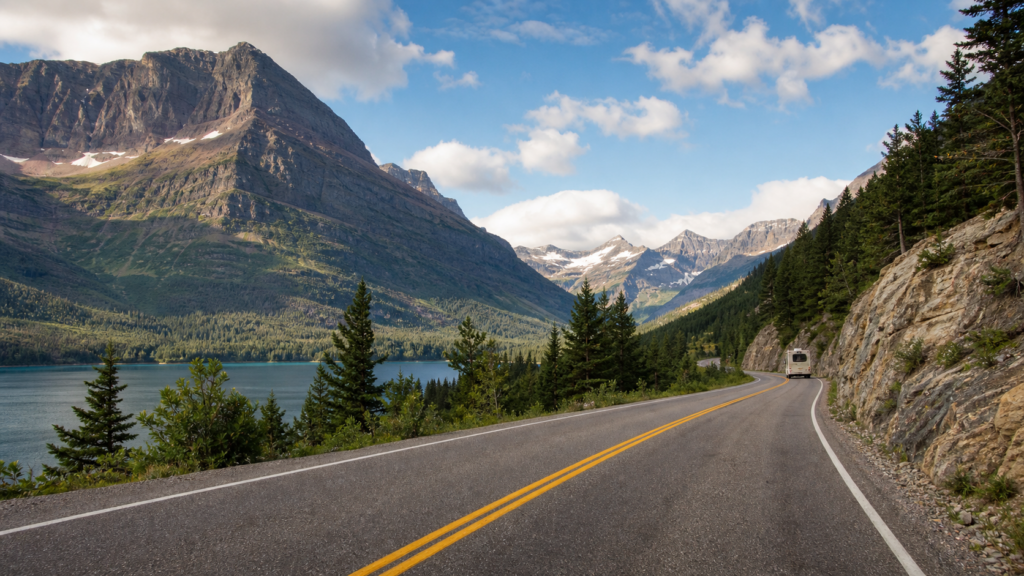
What are the RV/ campground restrictions for RV trips to Glacier National Park, the access to and from Logan Pass, and the campgrounds in Glacier National Park?
The Glacier National Park RV Trip Planner includes information on campgrounds, RV-Safe routes, Going-to-the-Sun Road restrictions, and the passes at Glacier National Park.
While Glacier National Park can be an amazing RV getaway, it’s not a place to automatically go where it looks good on the map. The park boasts narrow mountain roads, restricted parking in certain areas, seasonal access, sparse campground and one well-known alpine drive that has a pretty strict limit.
That doesn’t mean Glacier isn’t RV friendly, however. It simply means that the trip needs to be prepared as if it were a mountain RV trip. Before you arrive at Lake McDonald, St. Mary, Many Glacier, Two Medicine or Logan Pass, your campground, true total rig length, tow vehicle or shuttle plan, fuel stops, and backup day are all important.
This Glacier National Park RV trip planner is intended for motorhomes, travel trailers, fifth wheels, campervans, truck campers, and road-tripping families to make practical decisions before entering Glacier National Park. To learn more about the road itself, visit our Going-to-the-Sun Road RV trip planner as you travel!
Is Glacier National Park RV Friendly?
Glacier is RV friendly if you use the RV as a basecamp and select the appropriate vehicle for the day. It is not a fan of big rigs that stumble inside the narrow corridors, don’t call ahead, and don’t expect parking everywhere they look.
In short, it depends on the rig size.
Campervans, truck campers and small class B’s have the easiest time as they fit more roads and parking areas. Owners might need to measure length, width and height, although small Class C motorhomes might fit in some areas.
Large Class A motorhomes, longer Class C rigs, travel trailers and fifth wheels can still be great for a Glacier trip. The difference lies in the strategy: park the RV, check the campground’s size, and explore the most compact areas via legal smaller car, shuttle, or tour.
By leaving the campground out, you’re missing out on the best part of Glacier.
The campground is the main attraction in Glacier. Depending on your basecamp, it makes sense to use one or the other entrance, leave earlier or later, and will Logan Pass be a viable option or not and how much driving your rig can do on the mountain will be a deciding factor.
There are 4 questions you will need to answer before booking RV camping in Glacier National Park. What is my true bumper-to-bumper length? Do I need hookups? Am I taking a tow or shuttle? Do I want a west side or east side trip or a split stay trip?
The RoadReviewer rule: Park the RV and explore with the right vehicle.
The rule of thumb for the best Glacier RV trips is to park the RV and explore in the appropriate vehicle. That could be a tow car, a pickup without a trailer, the 2026 Logan Pass Shuttle, a guided tour or a legal small campervan.
Glacier National Park RV Campgrounds and Basecamps
Each Glacier National Park RV campground is unique, with regard to both its length and road access, as well as its generator policy, reservation policy, and seasonal availability. Please refer to the latest information on NPS or Recreation.gov before making a reservation.
Apgar Campground RV strategy
Apgar Campground RV planning is popular due to the location of Apgar which is close to West Glacier, Lake McDonald, Apgar Visitor Center, and the west entrance. It’s a good starting point for the west side approach, but doesn’t ease parking at Logan Pass. Arrival with fuel, groceries, water and exact site length confirmed.
Fish Creek and West Glacier basecamp logic and setups are in place.
Fish Creek is another west-side choice for RV travelers in the vicinity of Lake McDonald. Larger RVs, hookons, laundry, internet, showers, or just to avoid another busy day might prefer one of the RV Parks outside the park in the area of West Glacier. A private RV Camp is a practical basecamp for many long-rig travelers and not a compromise.
St. Mary Campground and east-side access.
St. Mary Campground RV planning is good for those who desire east-side access with a site close to the eastern terminus of Going-to-the-Sun Road. If hookups or more flexible site geometry are important, it is also worth comparing the St. Mary RV parks outside the park.
Many Glacier and Two Medicine are two of the most beautiful and popular but not always available to every RV.
Many Glacier RV camping is alluring because it’s stunning, however Two Medicine is a stunning east-side day-use area. NPS does state that Two Medicine Campground will be closed for utility work in 2026. Please verify road status, campground status and campground reservations and confirm rig size at Glacier National Park campgrounds before committing to a long rig.
There are times when it is a better choice to stay at a private RV park outside the park.
Opt for a private RV park when you require full hookups, a longer site, laundry facilities, better services, easier dump access and a less hectic arrival. The downside is the driving time, the upside is fit and services and fewer avoidable rig problems.
Going-to-the-Sun Road, Logan Pass and RV restrictions.
For many RV travelers, Going-to-the-Sun Road is the road of dreams, and it is also the road that many RV plans don’t work out.
Going-to-the-Sun Road is no ordinary RV drive for a number of reasons.
A restricted and steep alpine road with sharp curves, rock faces, drop offs, high traffic volume in summer and restricted parking. If it’s a passenger car, it can be one of America’s great drives. If you have a big RV or trailer, it’s a road to avoid.
Where do vehicle size restrictions apply and what are they?
Vehicle length and width (with bumpers and mirrors) is limited to 21 feet and 8 feet, respectively, between Avalanche Creek and Rising Sun on NPS Going-to-the-Sun Road. Vehicles over 10 feet high may have trouble with rock overhangs west of Logan Pass.
This has resulted in many Class C motorhomes, almost all the Class A motorhomes, most travel trailer combinations and fifth wheels not being suitable to plan across the central alpine part of the trip. Take U.S. Highway 2 around the south side of the park, or park the rig, and take another route.
Logan Pass parking reality and changes to access in 2026
Planning on going through Logan Pass for RV parking is not an option. There is even very early filling of parking for passenger cars during the peak season.
According to NPS, no vehicle reservations are needed, anywhere in Glacier National Park, for 2026. Instead, the park is experimenting with a ticketed Logan Pass Shuttle and restricting private vehicle parking at Logan Pass to 3 hours daily from July 1 to Labor Day, Sept. 7 (weather permitting). Tickets for the shuttles are sold with a $1 Recreation.gov processing charge for anyone age 2 and older and a 60-day advance and next-day release window.
The shuttle, tow vehicle or tour should be selected when appropriate instead of the RV.
If you want to get to Logan Pass, book a shuttle on the Glacier National Park shuttle system for 2026. Consider using a tow vehicle or separate passenger vehicle, if suitable and required for better control of schedule. If you’re looking to eliminate the driving and parking stress altogether, try a tour.
RV-Safe Routes Into Glacier National Park
When planning an RV trip to Glacier National Park, factors to consider are grade, width, fuel, weather, daylight and where you intend to sleep. GPS is not sufficient. Apply the process in our RV-safe route planning guide and check the conditions.
West Glacier approach and U.S. Highway 2
The common route from Kalispell, Whitefish, Idaho, Washington and the Pacific Northwest is West Glacier. This is also the practical route on the south side of the park on Highway 2 when your rig can’t cross Going-to-the-Sun Road into Glacier National Park.
East Glacier, St. Mary and U.S. Highway 89 considerations:
This is good for east-side routing out of eastern Montana, Great Falls, and out of northern Rockies loops, but be aware of wind and grades, construction and service spacing. Not all legal car routes are the best routes for the RV.
Many Glacier and Two Medicine access planning
A number of valleys in Many Glacier and Two Medicine need their own planning. Before towing into a tight or busy spot, know where you will park, turn around and sleep. If not camping there or if a campground is closed for the season, drive with a smaller vehicle from an east-side basecamp.
Fuel, groceries, propane, dump stations, and service stops before smaller roads
Don’t hesitate to use fuel, grocery, propane, water or dump services before taking on smaller park roads. Trying to get basic RV logistics done at dusk is not a good idea in Glacier.
Best Time to Visit Glacier National Park in an RV
Depending on your preferences for access, crowd levels, and weather, the best time in RV to visit Glacier National Park may be a bit different.
Summer is the best time to access, but is also the heaviest season for visitors, with the limited availability of parking.
The best time of year to expect full road access and services is July and August. They also create the highest pressure on campgrounds, shuttle demand and parking competition.
Generally, there are less people and more weather risk.
Roads, campgrounds, water systems, and services may be restricted during late spring and fall when they are quieter. Please be aware that access may be unavailable to Going-to-the-Sun Road or high country.
Wildfire smoke, snow, road openings and why current alerts are important.
It can be different with snow, wildfire smoke, construction, and staffing. Please review the latest NPS alerts, road conditions, campground conditions, weather and Recreation.gov bookings prior to leaving.
A practical 2-4 day glacier RV trip.
This is an RV plan for Glacier National Park that assumes the RV is parked and that restricted areas are accessed by shuttle, tour or by legal smaller vehicle.
Day 1: Arrive, basecamp and set up the rig.
Arrive during the day, check on site fit, level rig, handle tanks and establish bear-safe food storage. Eat lightly the first evening at Apgar, Lake McDonald, St. Mary or at your private RV park.
This day we will be riding without the oversized RV on Going-to-the-Sun Road / Logan Pass plan.
Take your shuttle, tow car, small car or tour plan. Be prepared for shifting weather conditions, drive within 2026 Logan Pass parking regulations, and get an early start.
Day 3: One of the Many Glacier, Two Medicine, Lake McDonald or a Shuttle Tour day.
Pick 1 primary area rather than attempting to “stack” valleys. On the west side, visitors can take longer to enjoy Lake McDonald, or follow up on a shuttle/tour plan. For those heading east, Many Glacier or Two Medicine are options if conditions on the roads, construction projects, parking and current alerts are favorable.
Day 4: buffer day, weather back-up, or clean back-up to Yellowstone / the PNW.
Try to use the fourth day for weather, smoke, laundry, tank service or a missed high-country plan. When you’re on a larger tour, check with our Yellowstone RV trip planner, Grand Teton RV trip planner or Mount Rainier RV trip planner.
Common RV vacation planning pitfalls.
The majority of bad Glacier RV days begin before the trip.
Suppose the entire park is a car road trip.
Glacier is a collection of valleys, seasonal roads, limited corridors and busy trailheads. A car has more room to improvise than a 34-foot motorhome or a truck with a trailer.
Booking a campground without checking true total rig length
Test the entire rig including the bumper, hitch, cargo rack, bike rack, tow equipment and mirrors. Then compare that number to the actual location, not just the campground name.
Trying to drive a large RV to narrow or congested roads.
For rigs that are larger than those allowed on Going-to-the-Sun Road, consider taking a detour on U.S. Highway 2, and use another vehicle for sightseeing.
Ignoring 2026 Logan Pass and shuttle rules.
In 2026, no vehicle reservation will be required, but shuttle tickets and 3 hr parking limits at the Logan Pass will apply. Check the regulations near travel.
Late without fuel, food, dump, weather support
When you are late, everything is more difficult with your RV. Bring adequate fuel, food, water, empty waste area and daylight into the park.
Glacier National Park RV Planning Checklist
Check off this list before you roll towards the park.
Rig measurements and route checks are conducted.
- See the total length of the RV or combination.
- Tape width with mirrors.
- Take the true height of yourself.
- Check if your rig is over Going-to-the-Sun Road limits.
- Establish RV-safe routes before using GPS, planned by Glacier National Park.
Acknowledges and checks campground and reservations.
- Check campground opening dates and if they are open or not.
- Please visit Glacier National Park campgrounds for RV length information on your site.
- Check Recreation.gov reservation requirements.
- Make comparisons between in-park camping and private RV parks.
Checks on road status, shuttle and parking.
- Know the status of Going-to-the-Sun Road.
- Understand rules of ticket use for 2026 Logan Pass Shuttle.
- Finalize 2026 limits for parking on the Logan Pass.
- Download offline maps.
Bear safety, food storage, weather and basics of offline mapping.
- Properly store food, coolers, grills, trash and scented items.
- Pack for sudden shifts in mountain weather.
- Always carry bear spray where allowed by law and be sure to know how to use it.
- Obey NPS wildlife viewing guidelines.
FAQ
Can you take an RV to Glacier National Park?
Yes. Although it is possible to drive an RV to Glacier National Park, long motorhomes, trailers and fifth wheels require campground fit checks and RV-safe routing.
The best campground in Glacier National Park is…?
Apgar and Fish Creek are functional for access on the west side. St. Mary is suitable for access on the east side. Many Glacier is a beautiful but careful site and road planning is needed. Two Medicine Campground is closed due to utility work, so it will not be an in-park campground option in 2026.
Can RVs drive Going-to-the-Sun Road?
The restricted section should only be taken by RVs that comply with the restrictions. No vehicles or combination of vehicles longer than 21 feet or wider than 8 feet will be allowed between Avalanche Creek and Rising Sun.
How big is the largest RV that can fit into Glacier National Park?
That will depend on the campground and site. When booking be sure to reference the specific NPS or Recreation.gov listing.
Are there hookups at the campgrounds in Glacier National Park?
Plan for no full hookups within the park. If you need electric, water, sewer, laundry or larger pads, you should shop around RV parks.
Is it possible to park an RV at Logan Pass?
For oversized RVs, no. Even parking for passengers is very competitive and it is not possible to park in 2026 for more than three hours during the pilot period at Logan Pass.
How long will you stay at Glacier in an RV?
The minimum is two days. Three is better. Four provides a weather margin and time for a Two Medicine day visit (if open), or Lake McDonald or a clean exit day.
When reviewing the options for a basecamp, which site is better: West Glacier or St. Mary?
West Glacier is more powerful in terms of services and access to Lake McDonald. St. Mary would be better accessed from the east side. Large rig travelers should be sure to compare site fit.
Final RoadReviewer Advice
The best Glacier RV trip isn’t one in which you attempt to take the RV everywhere. It’s taken advantage of the RV’s strong suit: a comfortable basecamp in the vicinity of one of America’s great mountain parks.
Honestly measure the rig! Reserve the right campground. For any instance when your RV should not be on the alpine road, use U.S. Highway 2. Don’t gamble on parking at Logan Pass, plan for it. Check with NPS and Recreation.gov for any changes in shuttle, road, campground, and parking regulations prior to traveling.
Do that and Glacier will be what it should be for RV travelers: large scenery, enjoyable camp mornings, easy driving days and fewer unnecessary errors.