The Rig
Airstream vs. Bowlus
The Ultimate Travel Trailer Battle
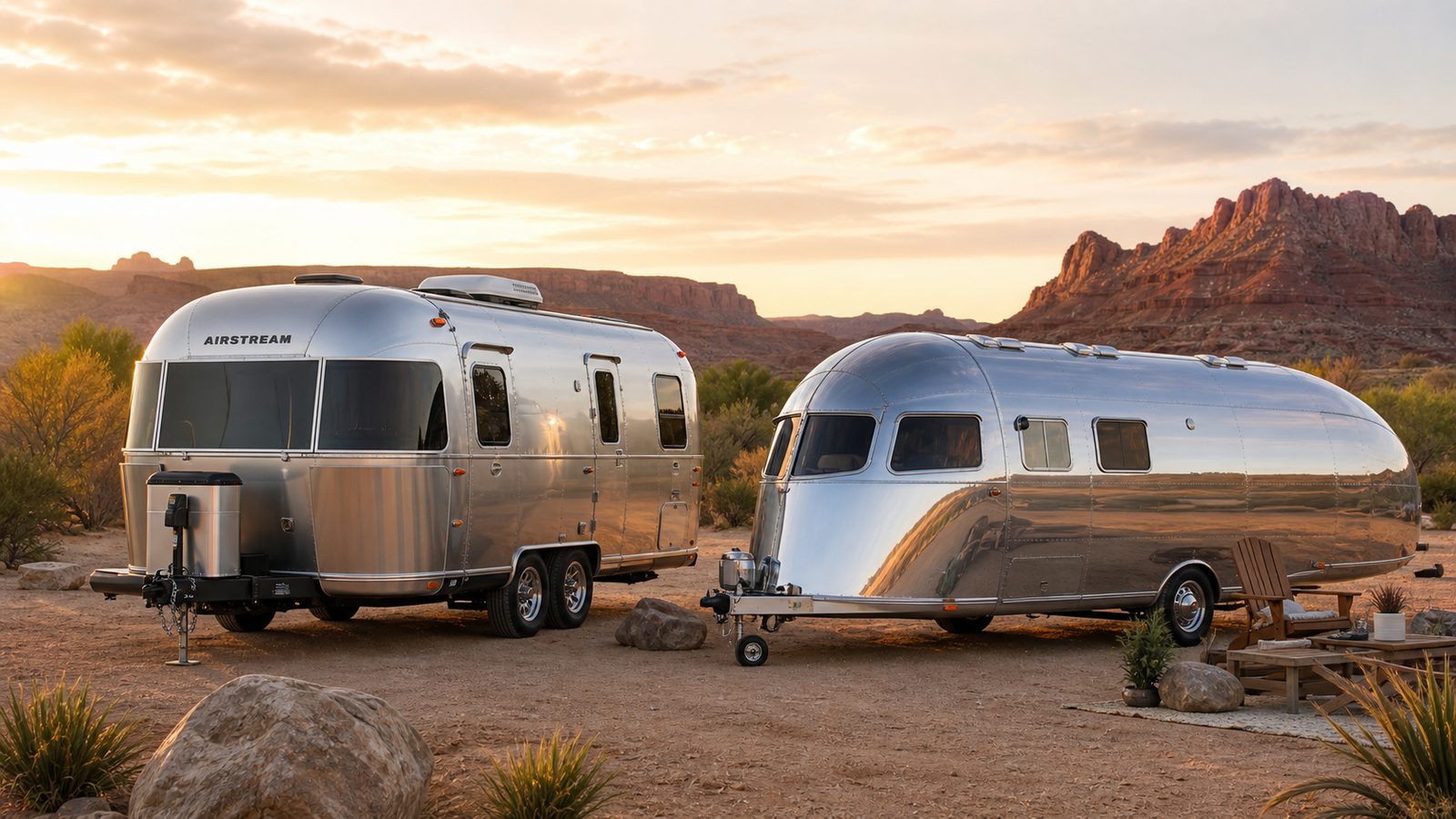
Airstream and Bowlus get the same mention because both are companies that create well done aluminum travel trailers with a serious luxury feel. On the surface, that comparison is fair, but when you consider the intended use of each trailer, you could be surprised to find that there are some stark differences between the two brands. The 2026 Airstream Classic is the Classic that's been tried, tested, and proven for the long haul and full-time living: bigger, heavier, dealer-backed, and more comfortable for home on the road. Bowlus, particularly the new Rivet and Endless Highways models, goes a more relaxed and more upscale path. It remains very polished and pricey, but most of its merits lie in its efficiency, light weight, and electrical design, which powers camping off the grid. It's not a competition of which of the two shiny trailers has the best design. It's a decision between a traditional luxury RV platform and a tech-forward lightweight travel trailer, which demands a different way of packing and traveling.
A Look at the Actual Purpose of These Trailers
The Airstream Classic is the best in the Airstream line of travel trailers and is a true flagship. The Classic size range for 2026 is from the 28RB to the 33FB. It is broad, solid and obviously designed for owners who want to have a living room, a bedroom, a kitchen and room to stay for weeks. The Classic is NOT trying to be minimalist. It is designed to convey a sophisticated home to you. Bowlus is different. The current 2026 Bowlus lineup begins with the Rivet, then Endless Highways including the Frontier Edition. The Rivet is 25 feet 3 inches, while Endless Highways is approximately 26 feet 9 inches. That's certainly smaller in terms of size than the longest Airstream Classic, but the gap in philosophies is just as large. Bowlus is attempting to create a trailer that is luxury, efficient, easy to manage and light. More an upscale expedition capsule than apartment on wheels.
Towing and Weight
Here is where the similarities really become apparent. The Airstream Classic models are heavy-duty trailers. The 2026 Classic 28RB has a GVWR of 8,800 pounds, while the 30RB and 33FB are rated at 10,000 pounds. Base weights vary from 7,650 pounds to 8,425 pounds prior to adding personal gear, water, food, tools and camping gear. Which does not make the Classic hard for a great truck, but it does mean that you should give careful consideration to the payload, hitch weight, wheelbase, and braking confidence of your rig. When taking the payload into account, a half-ton truck might not be the answer. The lightness is far more dramatic with Bowlus. The 2026 Rivet has a base weight of 2,900 pounds, and a GVWR of 3,500 pounds. Endless Highways base weight is approximately 3,200 to 3,600 lbs and GVWR is 4,000 to 4,400 lbs based on configuration. That lower weight alters the ownership experience. A well-rated tow vehicle is still required, but Bowlus makes room for more mid-size and electric tow vehicles than the Airstream Classic can practically accommodate.
The Interior Is Designed for Space and Comfort
Just in terms of insides, Airstream is better. The Classic is larger, longer and more traditional in its design. It provides private spaces for cooking, eating, relaxing, sleeping and bathing. That's a plus if you are planning to go on a vacation for months together, work from your workspace, or even if you do not like to change the use of your space each and every time. It is also important in adverse weather conditions. One of the big trailers may seem too much at campground, but over two days of rain, it feels cool. Bowlus' cabin is more intimate. It comes in a nicely-packaged form, but its owner is asked to value efficiency. The slimmer silhouette and lower weight will also signify less space for spreading out; some purchasers will pick up on that. However, Bowlus makes good use of the space he has. The interior has a more yacht than RV feel, and the style is more streamlined and individual. Airstream is very much a top-notch mainstream luxury. For those who appreciate quality and craftsmanship, Bowlus is like a small-batch item.
The Use of Power, Solar, and Off-Grid Energy
The Classic has been upgraded with modern systems, but it remains more traditional of the two types of RV. The 2026 Classic brochure has a 2,000 watt inverter, 300 watts of solar, 2.5 kWh of heated lithium batteries, 50 amp service, dual ducted air conditioning with heat pump, hydronic heating, and conventional propane cooking. It's a solid system for campground travel and decent out-of-the-way use, particularly for those that prefer familiar systems and dealer serviced parts. Bowlus goes further into the electric forward tenting campground. The 2026 Bowlus comparison data includes battery options up to 11.5 kWh for Rivet and up to 19 kWh for Endless Highways with Off-Grid Package II. Solar achieves 400 watts now with AeroSolar and even more with portable solar in some cases. Bowlus also stands out for all-electric systems, and even started manufacturing an all-electric production RV, Volterra, though it is now discontinued. The bottom line is: Airstream provides comfort with the logic of the RV. Bowlus provides you with a more rugged off-grid electrical platform.
Water, Tanks, and Real Camping Rhythm
One of those things that seems mundane until you get to the camp. Airstream Classic fresh-water capacity is determined by floor plan: The 28RB has a fresh-water capacity of 39 gallons; the 30RB and 33FB have a fresh-water capacity of 53 gallons. Extended travel is also met with the construction of grey and waste tanks. That puts the Classic more at home with longer journeys, where you'd want normal showers, normal dishwashing and fewer compromises in the day. Bowlus varies depending on the model. The Rivet has 19 gallons of fresh water and 21 gallons of gray water, while Endless Highways has 30 gallons of fresh water and 30 gallons of gray water, and some packages offer more fresh water. On current models, Bowlus adopts a cassette style toilet design, either popular with some travelers for its simplicity, or not so popular with others because it has a less residential feel. The Airstream feel is more familiar to RV owners upgrading from a traditional 24-foot trailer. For those travelers who are already conservation-minded and want something more streamlined, Bowlus is the better choice.
Price and Value
The two trailers are far from low-budget. Airstream prices the 28RB Classic at $190,400 and the 30RB and 33FB in the Standard range at higher starting points. The 2026 Rivet is $150,000 and the Endless Highway is priced at $185,000. The Frontier Edition begins at a much higher price point. On the surface, it appears that the entry Bowlus might be less-costly than the Airstream Classic, but not exactly. The Classic offers you increased trailer, increased floor space and a more traditional full size luxury RV experience. Bowlus offers a lighter frame, a boutique style and more sophisticated off the grid capabilities. In terms of square footage, Airstream is the winner. By towability, weight savings, power system potential, and exclusivity, Bowlus has a lot more to play. Also, resale is different. There is a massive Airstream brand footprint, and a long history of used-market recognition. This is rarer, which could work to Bowlus' advantage with the right buyer, but it could also be a disadvantage when it comes to selling.
Practicality of Service and Ownership
The most practical benefit of Airstream is infrastructure. It has a strong dealer network, a well known product, and a very strong community of owners, for whom, most issues have been resolved. That doesn't mean that owning is easy. Careful sealing is still required for aluminum trailers, maintenance is still required for running gear and attention is still necessary for luxury systems. However, if something goes awry, the route to assistance is typically more obvious. Bowlus is more direct and boutique. The company claims that its trailers are hand-made and shipped directly, characteristic of the high end experience, but also making ownership more niche. That's part of the appeal for some purchasers. They desire something unusual and unique in the form of a trailer. The wider range of service comfort that Airstream offers, particularly for those who must travel many miles from home for months on end, can be more important than the rarity factor. This is one of the most crucial questions in the overall comparison; do you desire a luxury product that is going to have mainstream support, or a more niche product that will have a more unique support path?
Design Personality
The trailers are both heavily based on aluminum, but they're not the same emotion appealers. Airstream is immediately identifiable. The rounded shell, panoramic windows and traveling trailers' polished silhouette are all a part of American road culture. Individuals are aware of what it is prior to knowing which model it is. The Classic, naturally, retains its iconic silhouette and is filled with the most relaxing iteration of Airstream's signature luxury standard. Bowlus also has a history that dates back to early aerodynamically designed trailers, but the product is more unusual on the road. It's more narrow, more streamlined and more aircraft-inspired in its use of its shell. The end result is not about showing up at the campsites, it's about getting it right. Airstream is like you just invested in a tradition that has been around for awhile. Bowlus gives you the impression that you are purchasing into the small design house. There are no automatic advantages to either approach, but it does impact ownership pride. Airstream is definitely more powerful for the classic trailer look, the one we all know. If you're looking for something less common and more low-key techy, Bowlus gets the nod.
Life on the Road
The routine will be altered throughout the day. A person can spread out in an Airstream Classic. Instead of constantly reconfiguring the cabin, you can leave a laptop on the dinette, prepare a proper meal, take a more normal shower. If the trailer is your home for a month or a season that is a big deal. It also makes Classic more convenient to share with guests or pets. Bowlus wants a neater way to travel. You pack with purpose; you make every space count and you enjoy the convenience of moving, parking and towing the trailer. For those who travel frequently or enjoy scenic pullouts, national forest roads, and the convenience of overnight stays as opposed to extended resorts, that tradeoff can be worthwhile. The Airstream Classic shines in situations where it's the destination that's paramount. Bowlus is best when the travel between places is enjoyable. Neither of these choices should be made with the assumption that you can travel like in the brochure, but not in reality.
Which One Should You Buy?
If you travel in long trips, love full size comfort, have a bigger tow vehicle, and would like a familiar RV system, then the Airstream Classic is for you. This is a better option for owners who want to live in the trailer, rather than just sleep in the trailer. For retirees, full-time individuals, remote employees, and couples looking for the trailer to be more like a home, this makes sense. If you're more of a traveler who appreciates mobility, weight and style, you should purchase the Bowlus. If you're interested in towing efficiency, electric systems, remote camping and a cabin that's more like an RV than a traditional home on wheels, then it's particularly interesting. The Bowlus isn't attempting to out-room the Airstream. It's aiming for luxury to be easier to carry. This is the one thing that really matters. Airstream is the more secure, bigger and more traditional alternative. Bowlus is the less dense, less common and more future oriented option. They are both high-quality trailers, but the ones that pay off to different types of owners.