The Rig
Sprinter 4x4 Camper
Off-Grid Van Life Perfected
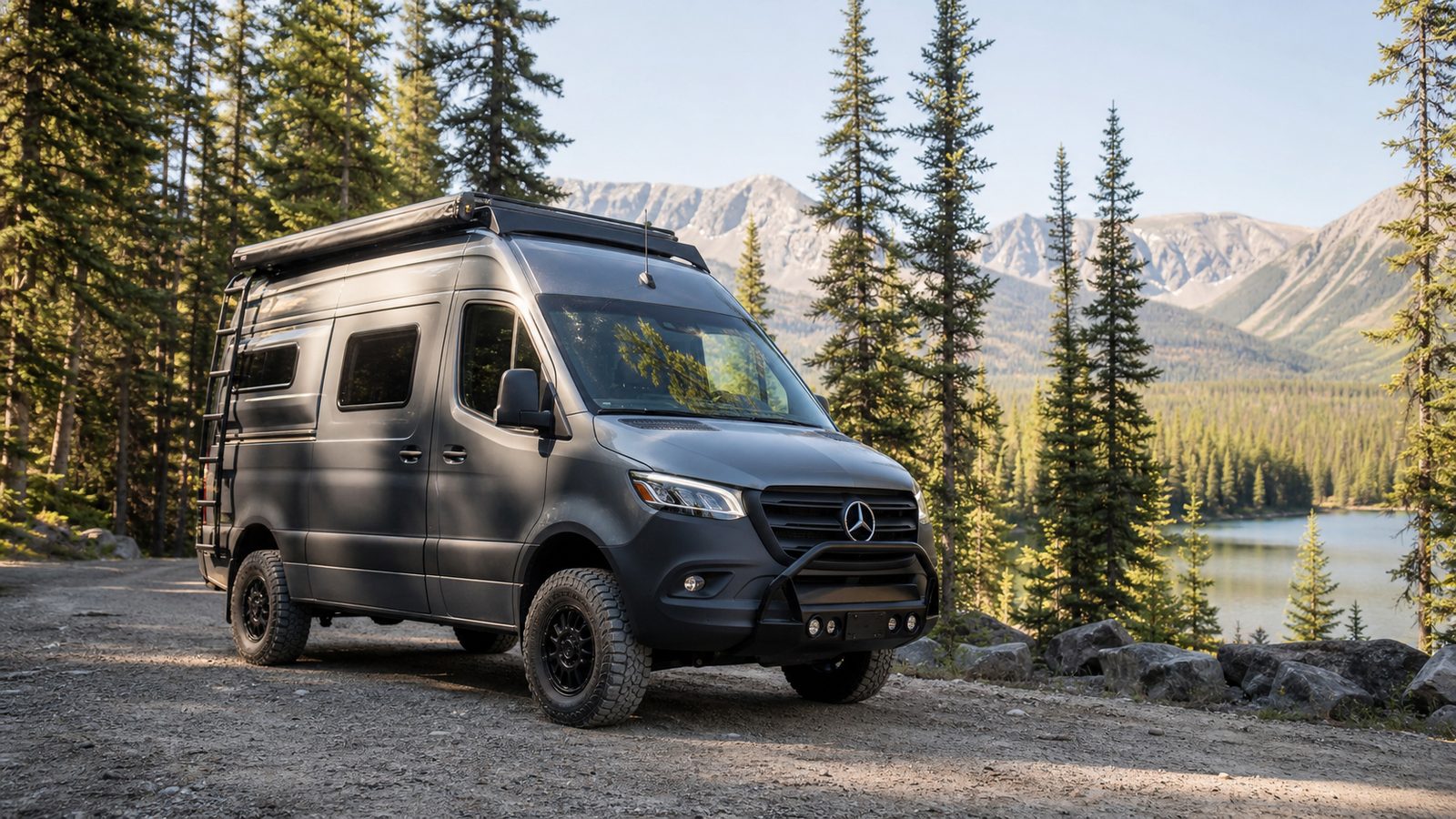
One of those ideas that seems just about perfect until you begin to look into the details is a Sprinter 4x4 camper. Being a van means that you can get into towns, find parking in a normal type of place, and feel more comfortable than in a large motorhome. It's also a Mercedes-Benz Sprinter, which brings to mind durability, diesel torque, long-distance driving and a more premium feel. Throw in all-wheel drive, solar, lithium batteries, a small kitchen, a bed, a wet bath or gear garage and somehow it seems like the cleanest form of van life. However, there's a catch. A Sprinter camper doesn't have to be an off-road camper, and it doesn't have to be a good value. For the right traveler, the best ones are capable, very easy to live with and practical. The wrong one could be costly, compact and overweight and not nearly as tough as the photographs lead you to believe.
Putting a Name Behind a 4x4 Is Not So Simple
Many people continue to refer to these vans as Sprinter 4x4 campers, but the new Mercedes-Benz Sprinter comes with an all-wheel-drive system as opposed to the previous selectable 4-wheel-drive setup. This is important because the expectation can go awry. The older 4x4 badge conjured up thoughts of a truck with a transfer case. It's best to think of the newer AWD Sprinter as a tall commercial van with more traction and better bad-road confidence. It is beneficial on snow, gravel, wet forest roads and rough access tracks. It does not make the van a rock crawler. Car and Driver recently tested a 2026 Sprinter AWD on an RTI ramp and discovered that while it had enough articulation to beat some crossovers, it was still no real off-road vehicle like a Wrangler. That's the way to think about it. It's about access, not abuse, and that's what a Sprinter camper is all about.
Chassis and Engine, Plus Daily Driving
A 2.0-liter diesel 4-cylinder and 9G-Tronic automatic transmission power the current U.S. Sprinter Cargo Van. They come in a standard-output version with 170 horsepower and 295 lb-ft of torque and a high-output diesel with 211 horsepower and 332 lb-ft. The one most adventure van buyers will pay attention to is the high-output engine, after the van is fitted out with cabinets, batteries, water, armor, racks and camping gear. However, toward the end of the Mercedes van's tow rating, Mercedes claims 5,000 pounds of max towing on many of the 2500 cargo van configurations, but most camper owners should be cautious as conversions can quickly erode that figure. The major attraction on the road is the fact that the Sprinter is more grounded and sophisticated than numerous older vans. It is tall, it is long and you never forget that, but even so, it's a lot less stressful than driving a Class A or even many Class C coaches.
The Detail People Ignore Is the Payload
Payload is the blending of the dreams of a Sprinter camper with the scale. With a 9,050-pound GVWR, some 2026 2500 Cargo Van configurations list a payload of 4,211 pounds. It may seem like a lot, but not when you start building. People, food, bikes and tools, recovery gear, solar hardware, inverter, water tanks, batteries, insulation, flooring and bed structure all start to eat into that number. This is why some of the pretty van builds aren't as functional as they seem. They are overloaded and are lifting heavy objects too high and too far behind them. The biggest thing to keep in mind in creating a good camper for the Sprinter is weight, not Instagram storage plans. A builder should not have any hesitation in explaining the finished weight, axle weight and remaining payload. The van may still be road-worthy, but it might not drive well.
Parking Is a Major Issue, Especially with the Size
Although smaller than motorhomes, Sprinter vans are not small vehicles. The most popular length, the 144-inch wheelbase cargo version, is 234 inches long, approximately 92 inches wide with mirrors and approximately 100 inches tall in standard-roof form. Depending on the tires, racks and accessories, high-roof AWD campers can be over 9 feet tall. That includes drive-thrus, parking garages, tree branches and ferry clearances. The good news is the van is still comfortable enough for many town streets, trailhead lots and national park roads. The 144-inch wheelbase typically represents the sweet spot for those who prioritize parking and maneuverability. A 170-inch wheelbase provides increased interior space, and it's starting to feel more like a small motorhome. Space is not free. All additional space must be operated and stored outside.
Inside Design and Living Comforts
The layout is the key to the Sprinter camper's success or failure. The area is tight, high and scarce, which means that each cabinet must find its justification. For bikes, skis, recovery boards and outdoor equipment, some builds feature a fixed rear bed with a garage below. Some have a convertible bed or lounge so they can have more space to live during the day. Winnebago's Revel is a good example of the gear-first approach, featuring a power lift bed with a flexible rear garage. Thor's Sanctuary and Tranquility are more of an RV-style Class B, and have small living spaces, wet baths and all of the interior comforts that make the van feel more like a full RV. Both directions may not necessarily be better. It depends on how you use your van, as a mobile gear locker, a small apartment or somewhere in between.
Choices for Bath, Toilet and Water
One of the greatest dividing lines is the bathroom question. A wet bath is handy as it will have an indoor shower and toilet, but does require a lot of space in a van. A cassette toilet or portable toilet can take up less space and may be less hassle for traveling long distances, but some owners do not want to do it by hand. Some custom builds even forgo a full bath and opt for an outdoor shower setup. That can be very effective in warm locations and very ineffective in cold rain. There are also significant differences in water capacity among builds. No small Class B van will ever be like a 100-gallon motorhome of fresh water. The real question is how many days you would be able to camp comfortably without having to refill. The water rhythm will be different if you're traveling with two people and doing dishes often, and you're bathing in the shower every day, than for a solo traveler at a campground using the shower.
Efficient Use of Solar and Off-Grid Power
In this regard, contemporary Sprinter campers have made terrific strides. Small batteries, propane and a lot of compromise often proved to be the basis of older van constructions. There are serious lithium systems available in newer vans, along with alternator charging, solar and an inverter. Off-grid power solutions, AWD turbo-diesel driving, and more gear storage are promoted by Winnebago with the Revel. Thor's Sanctuary and Tranquility are equipped with the Re(Li)able energy system from Fathom e-power, targeting extended usage away from hookups. It's the details that are important, not the headline. The length of time the van can stay out depends on the battery, the charging speed of the alternator, the inverter output, the solar system output and the type of appliances used. Still the difficult part is air conditioning. Some builds can run AC from batteries, but it will use a lot of battery. For the majority of owners, off-grid success is more about effective heat, refrigeration, lighting, charging equipment and smart ventilation.
Cold Weather and Bad Roads
A Sprinter AWD camper can be great in shoulder seasons, but winter is all about the build. The badge on the grille isn't nearly as important as insulation, window coverings, heated tanks, diesel heat, plumbing routing and battery temperature management. A properly constructed van can be cozy on chilly evenings and handy for skiing expeditions. A van that is poorly insulated and has exposed plumbing can become a real annoyance very quickly. Likewise with substandard roads. Tires can be a world of difference. So do ground clearance, suspension tuning and how much has been added to the rear. AWD aids in getting you moving, but it will not alter the breakover angle, departure angle or the height of the body. The Sprinter is a large and long van. It asks for patience on rutted roads. It is for those who are careful drivers, not for those who want to make a point.
Factory Class B or Custom Build?
There are two types of camper for the Sprinter, either factory Class Bs or custom or semi-custom builds. Factory models such as the Winnebago Revel, Thor Sanctuary and Thor Tranquility offer dealer support, familiar layouts, warranty terms and quicker shopping. You can compare specs, do a tour of units and typically finance units just like RVs. Custom builds provide more control. You can have a selection of bed height, the material of the cabinets, electrical arrangement, water layout, storage, heating and finish style. However, there will be more work involved in education and it may be more difficult to maintain if the builder goes out of business or uses exotic components. For a lot of purchasers, the factory van is the safer route. For the more discerning ones who have a specifically detailed gear list, custom is more rational. The secret is to avoid purchasing a cool design that won't work for you.
Price and Value
The first time shoppers are surprised by this step. While a Mercedes Sprinter Cargo Van is a lot lower on the food chain than a completed camper, a true adventure camper can climb right up there in the RV range. The 2026 Cargo Van is priced at $48,990 or above, according to Mercedes, and that's the commercial base. Today, Winnebago says the Winnebago Revel begins at $261,808. Thor quotes the Sanctuary and Tranquility Sprinter at $214,060. Custom builds can be anywhere, depending on parts and labor. So the question isn't whether or not a Sprinter camper is cheap. It is not. The question is whether it allows you to travel more, park more easily, carry the proper equipment and eliminate the need for a second RV. When it becomes your road tool of choice, the price may seem worthwhile. If it's only used twice a year, it's a pretty costly driveway sculpture.
What Could Be Better
There is something wrong with the Sprinter camper. Space is definitely limited, particularly when two are trapped inside, facing bad weather. Large vans catch wind and can be noisy on bad roads. The cost of service may be higher than domestic service and not all Mercedes dealers like working with heavily modified campers. Payload can be a real problem. The price is high. Nor is the van going to stop being a large commercial platform with limited clearance and no magic trail ability just because of its off-road appearance. Some owners would prefer a pickup camper, a small travel trailer or a Ford Transit AWD build. When you use the strengths of the Sprinter, it is excellent. But it is frustrating when you're expecting it to be a luxury apartment, and a rock crawler to boot.
Who Is the Sprinter Camper For?
The Sprinter AWD camper is ideal for the single person or couple and active owners who move frequently and carry with them real gear. It's ideal for mountain bikers, skiers, climbers, photographers, remote workers and road trippers looking for a smaller basecamp area rather than a campground-oriented motorhome. If driving ease, stealthier parking, diesel range and pulling into spots that would otherwise be too small for a large RV is important to you, then this is an excellent option. It is not a good choice for families with a need for space, those who wish for long showers, and those who dislike maintenance and limited storage. The Sprinter camper is a great tool but it's still a tool. Purchase it not because the van life aesthetic is pretty in the pictures, but because it's the way you travel.