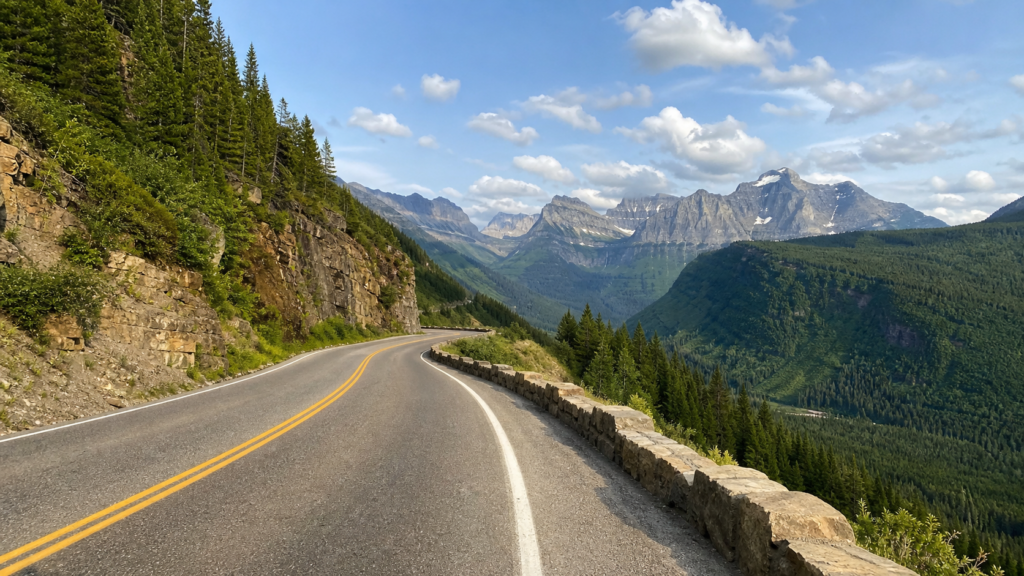
Going-to-the-Sun Road RV Trip Planner: Vehicle Restrictions, Campgrounds, and Glacier Detours
In addition to vehicle restrictions, campgrounds and Glacier detours are all included in this Going-to-the-Sun Road RV Trip Planner.
One of those roads that makes RV travelers start dreaming before they begin measuring is Going-to-the-Sun Road. It’s the glacier peaks, the waterfalls, the alpine air and the ascent to Logan Pass that’s the draw. However, this is not a normal scenic byway in an RV.
The first question to ask when you begin planning your RV trip on Going-to-the-Sun Road is, "What is my RV capable of doing legally and comfortably?" Vehicle size restrictions for the alpine section, limited turnaround areas, high summer usage, shifting access rules, and campgrounds with site length considerations all matter. This Glacier National Park RV trip planner is designed with realism, with questions about where to stay, when to shuttle or take a smaller vehicle, and how to plan an RV-safe Glacier National Park route if your motorhome, travel trailer, fifth wheel, or campervan should not drive the entire road.
Why Going-to-the-Sun Road Needs RV-Specific Planning
Going-to-the-Sun Road is narrow, seasonal, popular and cut through steep terrain. Your engine’s ability to climb makes up just one part of the RV problem. It’s length, width, loaded height, mirrors, rock overhangs, traffic, pullouts, driver comfort, parking, and whether you have a back-up route before the day goes away.
The road also gets different in different seasons. Access can be impacted by snow clearing, construction, weather and congestion. In the case of Glacier National Park road closures, they are not an inconvenience here; they are a part of the road plan. Current NPS road status, campground pages, Recreation.gov listings and shuttle info should be checked again before publication and before travel.
If it’s your first time with this type of screening, begin with RoadReviewer’s guide to planning an RV-safe route before you hit the road. Use the same methods in Glacier: measure your rig, check official restrictions, find bailout roads, and don’t let a car GPS tell you what to do for your loaded RV.
Quick Answer: Can You Drive an RV on Going-to-the-Sun Road?
Yes, some RVs can drive some of Going-to-the-Sun Road, and smaller rigs may be able to drive more of it. However, many RVs are not allowed to operate on the restricted part of the mountain road, and some legal rigs may not be a comfortable fit for the driver.
Best fit:
- Campervans and Class B RVs staying within the rule of the road.
- Motorhomes in the small Class C size with documented height, width and length.
- Truck campers and compact setups for people who are comfortable driving on mountain roads.
Extra caution:
- Large Class A motorhomes.
- Fifth wheels and long travel trailers.
- Motorhomes towing cars.
- Any setup close to the posted Going-to-the-Sun Road vehicle size restrictions.
The question most travelers should ask isn’t, "Can you drive an RV on Going-to-the-Sun Road?" It is, "Should this particular RV, at this particular loaded height, and at this particular total combination length, be driving this particular section today?"
Going-to-the-Sun Road Vehicle Restrictions RVers Must Know
RVs traveling on Going-to-the-Sun Road are subject to special regulations. As of the latest NPS guidance checked for this draft, vehicles and vehicle combinations longer than 21 feet, including bumpers, or wider than 8 feet, including mirrors, are prohibited between Avalanche Creek and Rising Sun. Vehicles over 10 feet high may have difficulty driving west from Logan Pass to the Loop because of rock overhangs. Specific boundaries, the exact wording, and any changes that are made from year to year should be confirmed on the official NPS Going-to-the-Sun Road page before publication and prior to travel.
It is on that basis that vehicle size restrictions are being enforced on Going-to-the-Sun Road. They also break down why the "RV friendly" shortcut isn’t right. A 20-foot campervan and a 32-foot Class C are both RVs, but they are not the same Glacier vehicle.
Measure and write down:
- Loaded height, including air conditioners, vents, antennas, roof racks, solar mounts and cargo boxes.
- Actual bumper-to-bumper size of the RV.
- Full length of the combination for a tow.
- Width with mirrors.
- Driver comfort with narrow lanes, steep drop-offs, traffic and short pullouts.
Don’t argue it by saying the brochure length is close enough. The NPS page is the authority for Going-to-the-Sun Road length limit questions.
Build Your Glacier RV Plan Around Basecamps, Not Through-Driving
To build an RV plan, start at a basecamp and stay there, rather than drive through.
The purist approach to RVing in Glacier is to not consider Going-to-the-Sun Road to be a through-drive for every RV. Imagine an alpine adventure you reach from the right basecamp.
On the west side, people coming from Columbia Falls, Kalispell, or Whitefish should consider Apgar, West Glacier, and the Lake McDonald area. On the east side, St. Mary and nearby communities prepare you for the entrance to the park from the east, the Rising Sun area, and a view of the park from the east side.
For the larger RVs, using a two-base approach would be preferable to attempting to transport the rig through the middle. Camp on one side, drive a smaller car or shuttle for the alpine part, and relocate around the park via an RV-safe outside route for time on the other side.
It’s a similar way of thinking as other scenic RV routes. Both RoadReviewer’s Blue Ridge Parkway RV trip planner and Pacific Coast Highway RV trip planner remind you of this rule: if circumstances change, the best route is the one that fits your rig and leaves options.
RV-Safe Route Options Around Glacier National Park
Find safe alternatives to traveling around Glacier National Park.
The main practical detour is outside the park if you can’t use the restricted part of Going-to-the-Sun Road with your RV. U.S. Highway 2 follows the south side of Glacier with access between the west and east sides of the region. Many RVers decide to travel via a Highway 2 Glacier RV route instead of taking Going-to-the-Sun Road in anything too large for the alpine section, saving the road itself for a compact car, shuttle or tour.
Highway 2 remains a mountain-country road. Don’t assume it’s easy; check weather, construction, grades, fuel and campground access. However, for large motorhomes or long trailers, it is usually the obvious planning corridor as opposed to trying to bend a large rig through the restriction zone in the mountain part of the park.
A real-life practical pattern looks like this:
- Camp on the west side near Apgar, West Glacier, Columbia Falls or Kalispell.
- Explore Lake McDonald, Apgar Village, and west-side trailheads by an appropriate vehicle.
- If your RV is too big for the alpine road, use a shuttle, tour or a smaller vehicle to explore Logan Pass.
- Use the RV-safe outside route around the park, usually Highway 2 as conditions dictate.
- If you wish to spend more time at St. Mary, camp on the east side near St. Mary or nearby private campgrounds.
Avoid letting a navigation app make shortcuts on smaller roads because the map appears shorter. Conservative routing is the best approach for Glacier.
Logan Pass, Parking, and Shuttle Planning
Plan to park and take shuttle rides to and from Logan Pass.
Logan Pass is the emotional center of many Glacier trips, which is why it needs a plan. Parking fills, weather conditions change, wildlife congestion can occur, and the road itself requires attention. Logan Pass RV parking isn’t something to be done on a wing and a prayer with an oversized rig.
NPS has declared that there will be no vehicle reservations needed in Glacier National Park in 2026 as part of a pilot program. Changing access to Logan Pass also introduces ticketed access for the Logan Pass shuttle from July 1, 2026 through Labor Day, September 7, 2026, and a three-hour time limit on private vehicle parking at Logan Pass in the same date window. Shuttle tickets are handled through Recreation.gov, assigned to specific boarding locations and times, and released in two windows: 60 days in advance starting May 2, 2026 at 8 a.m. MDT, and the night before starting June 30, 2026 at 7 p.m. MDT. Any details regarding stops, departure points, return times, and operating rules should still be checked on the official pages of the NPS shuttle and Logan Pass before publishing.
The bottom line for RVs is clear:
- If your rig goes over the alpine limits, it is not intended for a drive to Logan Pass.
- If you can get in your smaller car, don’t expect to get there without traffic.
- If taking the Going-to-the-Sun Road shuttle 2026 system, double check your ticket prior to arrival and be aware of the specific shuttle stop location and departure time.
- Don’t expect old first-come, first-served shuttle habits to be in effect.
- Create the day to ensure you aren’t coming down exhausted, hungry and late.
Campgrounds and RV Fit Near Going-to-the-Sun Road
RV camping is competitive and the details are important in Glacier National Park. Popular campgrounds RVers look up are Apgar Campground RV options on the west side, St. Mary Campground RV access on the east side and Fish Creek Campground RV sites near Lake McDonald. All of these can make great bases, but each one must be verified for current season, reservation status, max RV length, generator policies, road access and services.
Don’t assume that the term "campground" is synonymous with "good for my RV." Confirm:
- The length of the site, including tow vehicle space if applicable.
- Back-in angle, pad slope and loop maneuvering.
- Generator hours or generator-free loops.
- Hook-up or no hook-up status, potable water and dump station status.
- When to arrive and what the late-arrival guidelines are.
- If there are road closures or seasonal restrictions that impact access.
Outside the park may be a better option for larger rigs, hookups, laundry facilities, easier turns, and reliable services, as these are all provided by private RV parks. They don’t feel as wild as camping in Glacier, but they can enhance the whole trip.
If you are interested in RV camping near Going-to-the-Sun Road, make your booking early, make an alternate list, and don’t come last minute. After sunset with a long trailer, I wouldn’t want to be hunting for a legal overnight spot in Glacier.
A Practical 3-Day Glacier RV Itinerary
Day 1: West Side Arrival and Lake McDonald
Arrive with daylight and options left. Establish a base near Apgar, West Glacier or any other west-side base suitable to your RV. Take advantage of the afternoon for Apgar Village, Lake McDonald, fuel, groceries, and checking the next day’s road, shuttle and weather conditions. Make your arrival day NOT the Logan Pass day.
Day 2: Going-to-the-Sun Road Experience
Ride a ticketed shuttle, guided tour, or legal compact campervan, whichever is appropriate for your particular rig, comfortable for the driver, and fits current restrictions. Emphasize the day on Logan Pass, overlooks, short walks and the alpine area that you have traveled to see.
Maintain the return plan for clarity. If travelling by shuttle, know the last time you will be able to get back and don’t overcommit to a hike that means racing daylight.
Day 3: East Side or RV-Safe Relocation
To move the RV to the east side, move the RV using an identified RV-safe route during an appropriate time, such as the Highway 2 corridor. For those who will be staying west, it’s a good day to follow a lower-stress plan: west-side trails, scenic stops, laundry, dump station, or a buffer day for weather.
The objective of a three-day Glacier RV itinerary isn’t to see everything Glacier. It’s to see the right part without making the RV the issue.
Safety Checklist Before You Commit to the Drive
Prior to committing to the drive, follow this checklist to keep the day inside a safe margin.
Before each Going-to-the-Sun Road RV day:
- Read the official NPS Going-to-the-Sun Road status page.
- Verify existing vehicle restrictions and the specific restricted area.
- Measure loaded height, width with mirrors, and total combination length.
- Check campground rules, reservation, and site length.
- If using the shuttle, check shuttle tickets, boarding point and return time.
- Look at weather at elevation, NOT just in town.
- Start with enough fuel for the plan and detour.
- Save maps offline but do not depend on a car GPS to make RV decisions.
- Plan an alternate route before departing camp.
- Establish a turnaround time to ensure that you don’t make mountain-road decisions at night.
If the day feels cramped, swap the day. Glacier will still be there tomorrow. Your responsibility is to maintain the rig, driver and passengers within a comfortable safety margin.
Common Mistakes RVers Make at Glacier
The first error is to measure the RV by memory. The loaded height varies depending on the roof gear. Length changes when adding a towed car. Width includes mirrors.
The second error is thinking that if an RV is small, then it must be legal. There is a possibility that a compact Class C can still be too long or too tall. A campervan Going-to-the-Sun Road plan will only work if the exact van fits the current rule and the driver is road savvy.
The third error is the design of the entire park around the parking area at Logan Pass. Parking access may change, congestion may cause delays, and the 2026 rules must be reviewed with official sources. Logan Pass is not a casual visit; it’s a controlled day.
The fourth error is to reserve RV camping in Glacier National Park without checking the campground details. Current site information is required for Apgar Campground RV planning, St. Mary Campground RV planning, and Fish Creek Campground RV planning.
The fifth error is to refuse the detour. Taking Highway 2 around the park in a large RV is not missing Glacier. It is making the Glacier trip fit the gear that you brought.
Final Recommendation: Make the Glacier Trip Fit Your Rig
The advice is to ensure that the Glacier trip is compatible with your rig.
Going-to-the-Sun Road is a definite Montana RV road trip centerpiece, but the best RV trip is probably not a large rig forcing the entire route. Take time to measure, confirm regulations from the official National Park Service, select basecamps, and opt for a smaller vehicle, shuttle or tour if your RV is too big to fit on the restricted road.
If you are traveling in a Class B RV, you may be able to have more flexibility, but you should still take account of current limitations, parking pressure, weather conditions, and the comfort of the driver. If you are driving a larger motorhome, fifth wheel or travel trailer, think of Going-to-the-Sun Road as the scenic centerpiece you reach from a safe basecamp, instead of the place your RV needs to conquer.
Check RoadReviewer’s Routes category for more RV route planning guides, and keep this Glacier rule foremost: Arrive with daylight and options left. That one habit prevents more trouble than any perfect itinerary.