The Craft
Generator Maintenance
Keep Your Power Source Running Forever
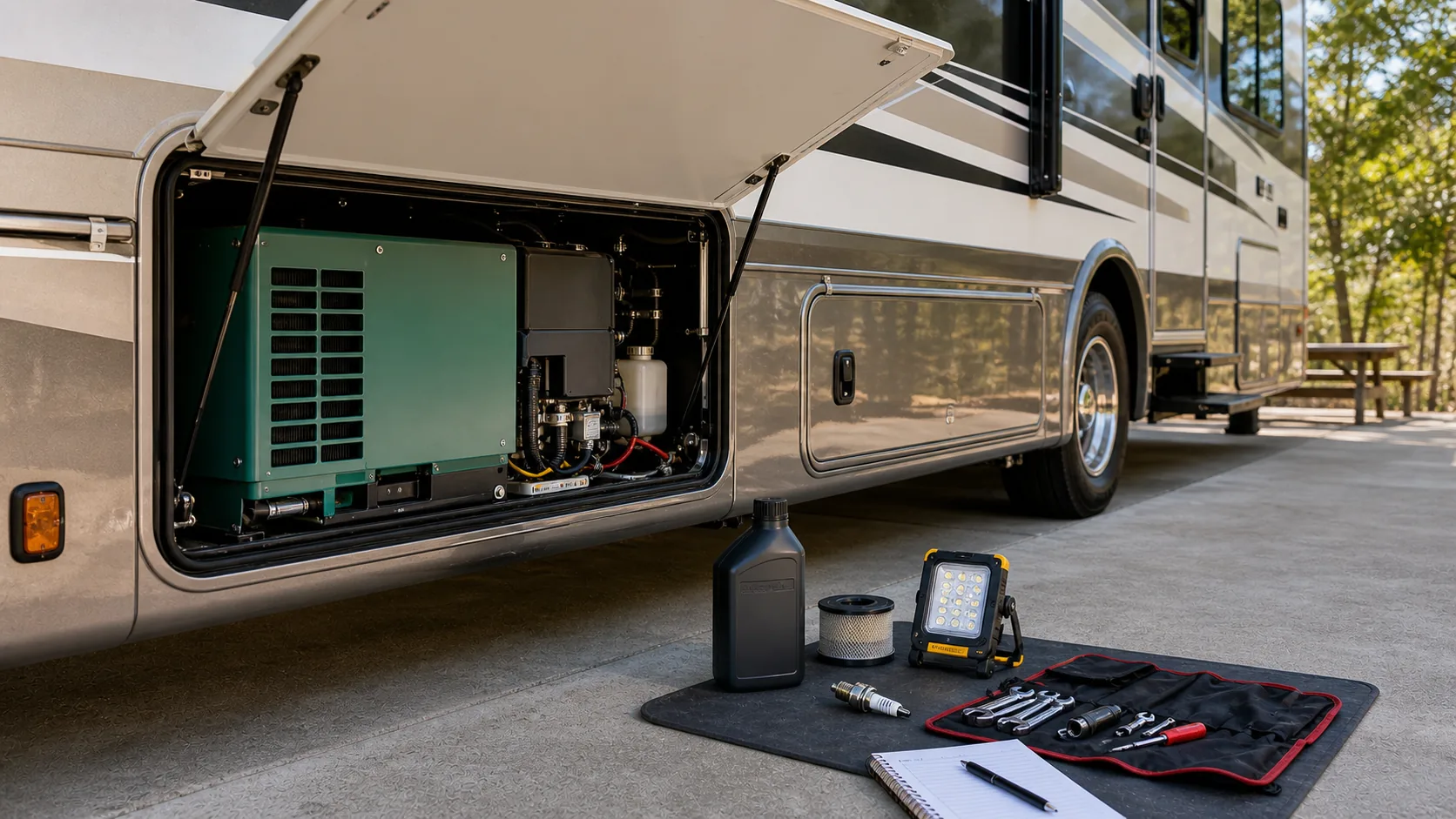
When you're hooked into the power grid, it's easy to forget that you have an RV generator. The first time there's a hot travel day, the campground outage or a long boondocking experience that relies on it, the generator becomes a critical system in the coach. When it comes to generator reliability, it's not just brand. It's about a regular workout, clean oil, clean filters, good gas, cooling air, proper load and not waiting until the night before a trip to test it.
While most RV generators installed will run, they don't like neglect. Low oil, dirty air filters, rodents, corroded connections, not running under load, long storage, and stale fuel can cause trouble, and it can seem suddenly like it's happening when really it happened over the course of months.
RoadReviewer Take
The key to a good generator maintenance program is all simple: follow the instructions in the manual; operate the generator regularly under load; change oil and filters at the right time; maintain fuel quality; keep compartment clean; test the generator before you need it. An emergency generator that only operates in emergency situations, often fails as an emergency generator.
Exercise the generator
Turn ON generator exercise is not only 5 minutes. The unit must be heated and load must be added. Operation in load also ensures the internal components remain lubricated, it helps prevent moisture buildup, and it allows the owner to observe rough starts, surges, warning lights, foul odors or shutdown codes.
The common practice of many owners of Onan type installed generators is to follow a monthly exercise schedule outlined in the manufacturer's handbook. The actual length of time and load is dependent on the model, and the manual wins. In essence, just because a generator hasn't been used for half a year, doesn't mean it should be able to power the air conditioner in July.
Oil changes are required on a regular basis.Regular oil changes should be done.
The reason oil changes are important is that RV generators are often running heavy air conditioning loads when they are in the hot compartment. Monitor oil level prior to longer trips and extended generator usage. Apply the oil type and viscosity suggested for the model and temperature range. Change oil filters (if applicable).
Air filters are just as important. A clogged air filter can cause the generator to run rich, decrease output, or run poorly under load. Other items that should be added to the service plan are fuel filters, spark plugs and coolant checks for diesel and liquid cooled units. Maintain a record of hours and dates. There's a reason why hour meters exist.
Today's fuel quality is a huge deal.
Stale fuel is the bane of gasoline generators. There are storage issues with ethanol blended fuel, particularly for small carbureted engines, if left in them for an extended amount of time. Fuel stabilizer can be beneficial if applied properly before you store the fuel but it will not remedy old fuel that is already causing problems.
There are other diesel generator issues: fuel filters, water in fuel, algae in stored fuel and cold weather fuel characteristics. Propane generators do not have to deal with some of the storage issues associated with gasoline, but they require clean combustion, regulator maintenance and correct pressure.
Safety with cooling airflow and exhaust gases.
Generators need air. Overheating or shutdown can be caused by a blocked compartment, packed storage bay, debris covered intake or even a rodent nest. Do not use this compartment for loose storage and keep it clean. Check the exhaust system; do not ignore the smell of exhaust in or near the RV.
When it comes to carbon monoxide safety, there's no give. Test and replace CO detectors at end of their term. Never operate a generator under any of the following conditions: where exhaust can be trapped under an awning, by an open window, near other rigs, or inside an enclosed area. Portable generators need even more attention since the placement is different for each campsite.
Load management
A generator is rated for a number of watts, but it doesn't necessarily mean all appliances can start simultaneously. Air conditioners have starting up surge. Loads are microwaves, converters and water heaters, and battery chargers. However, load management can be the cause of a generator trip or struggling start if the A/C is started.
Large loads to be started should be done one at a time. Allow the generator to "warm up" before there is heavy demand for it. Know what is being lost and why when the RV has energy management. Don't expect the generator to grow when it is maintained if the owner thinks it is too small.
Know what to anticipate in the way of weather conditions.
The worst time to find a generator problem is when a generator is needed at a remote location or during a power outage. Prior to a trip, start it, warm it up, run the A/C or any other significant load, do a stability test and check for leaks, warning codes, smoke or unusual noise. A 10 minute drive-in test can avoid an unattractive surprise at your campsite.
Portable generator note
Portable inverter generators present some maintenance issues and safety concerns. They're still subject to oil change, clean air filter, spark plug checks, fuel and proper storage. They also must be provided with safe transport and grounding instruction, safe separation from the RV, and cable management. Do not use one in a compartment unless the compartment is designed and installed to accommodate the running of a compartment.