The Craft
Water System Care
Clean, Fresh, and Reliable On the Road
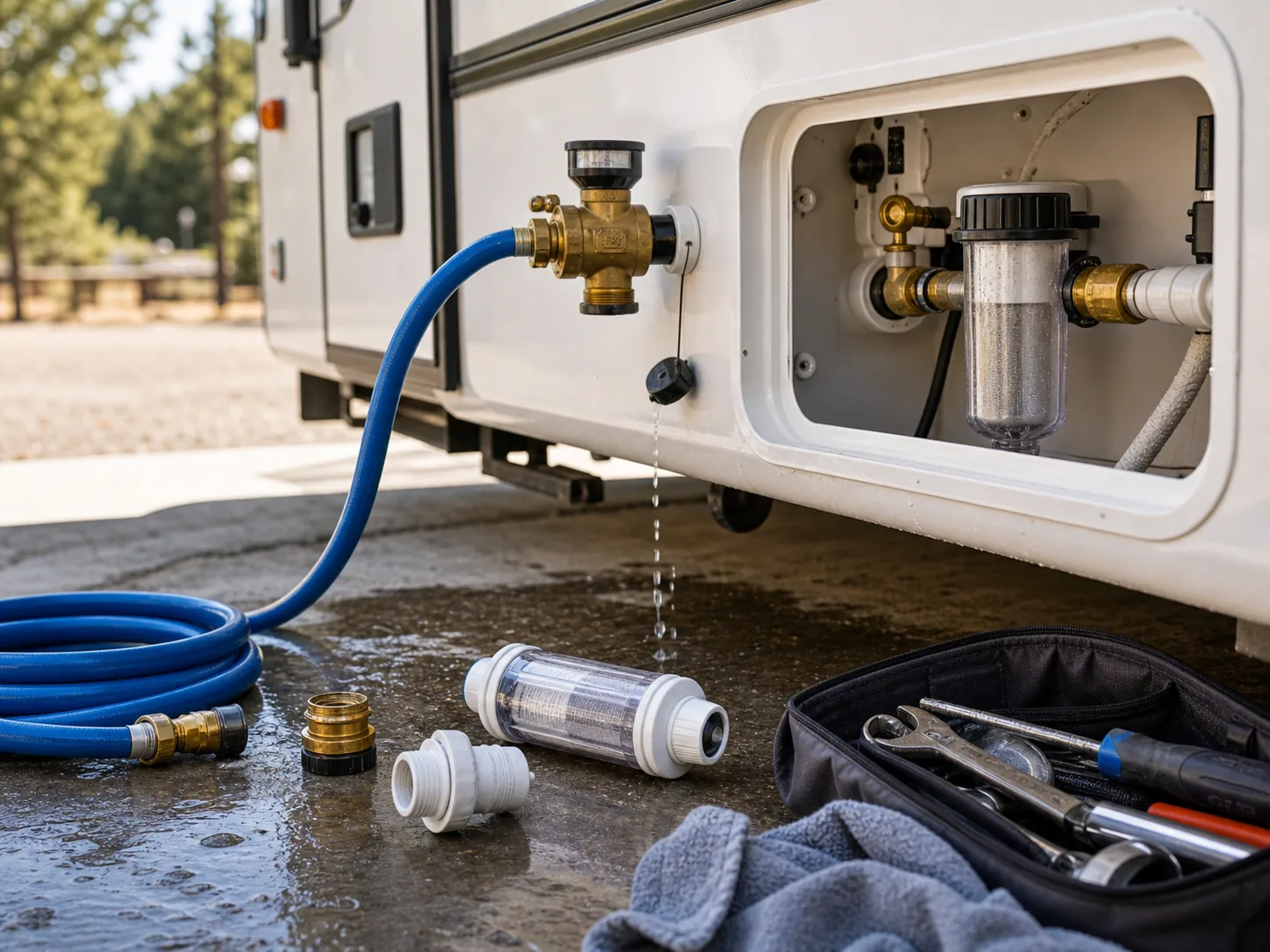
One of those things that the owners of an RV trust after it has behaved properly for a while is the RV water system. All of the following components must function together: fresh tanks, pumps, city-water connection, filters, water heater, faucets, toilet, drains, gray tank, black tank, low-point drains and winterizing valves. When they don't, the RV is acting up. If they don't, a simple trip can be transformed into a leak, an odor, low water pressure, unpleasant taste or soggy floors.
Taking care of a water system is easy but it is regular. Maintain the fresh system, monitor pressure, check for leaks, clean as needed, drain for storage, prevent freezing and know the sound and actions of the pump and valves.
RoadReviewer Take
Non-catastrophic water system failures are the most frequent and are also the most costly. Either a slow drip, a cycling pump, a loose fitting, a stale tank, a clogged aerator, a tired anode rod or a forgotten filter can become the thing which makes a trip sour. The best owner habit is to observe and listen.
The source is the beginning of fresh water.
All campground spigots are not created equal. Do not use a garden hose; use a potable-water hose. Avoid leaving hose ends on the ground and leave capped in storage. A simple sediment or carbon filter will help with taste and debris; filters do need to be replaced. A dirty filter can be part of the solution.
Investing in a water pressure regulator is inexpensive. There can be pressure changes in the campgrounds, and RV plumbing is not designed like residential plumbing. Install a regulator at the spigot and inspect after connection to city water for leaks. Don't leave any suspect connections pressurized when you leave the RV.
Sanitizing and taste
Fresh tanks may have stale taste or smell, particularly when stored or left in a warm environment. Cleaning is a standard maintenance procedure and technique should correspond with the RV manual. Bleach sanitizing is widely used, but stronger isn't necessarily better. An excess of chemical or inadequate flushing or an inappropriate product can cause its own troubles.
Once sanitized flush until odor and taste are satisfactory. If the sanitising process was run through the filters, or as recommended by the filter manufacturer, replace the filters. Use bottled water if there is any doubt about the water quality until the water system has been cleaned and water quality confirmed.
This is because the behavior of the pump tells a story.
When a faucet is opened the water pump should operate and cease to operate when the pressure rises. If it cycles with no fixture opened, a leak or check valve failure is occurring. This leak could be a toilet valve, an outside shower, a water heater line, a pump strainer, or a hidden leak.
Don't forget about pump cycling. It might be just a bit leak at the moment. A small leak behind a cabinet or under a floor is water going somewhere.
Water heater care
Tank water heaters require maintenance. Flush out and drain sediment (as per manufacturer's instructions). Check and change anode rod if worn in unit with an anode rod. Never fire the heater without any water in the tank. Each model of tankless water heater requires its own level of maintenance such as guidance on descaling and freeze protection based on the hardness level of the water.
A bad condition of the hot water tank, the source water or the bacteria reacting in the heater can cause hot water to smell. Before adding random chemicals follow manufacturer cleaning guidance.
The water tank is black, while the toilet water tank is gray.
Tank care is primarily one of volume and habit. Use enough water when flushing. At full-hook up locations, do not leave the black tank valve open; solids must have liquid to be able to leave the tank. First dump black, then gray to assist in flushing the hose. If tank treatments are your preference, then utilize them; do not rely on tank treatments to correct poor water habits.
Causes of odors include dry traps, toilet roof vent problems, toilet seals, tank deposits, or air admittance valves. Not all odours are the black tank.
Freezing and storage
Care of the water system changes during the freezing weather conditions. Correctly drain, bypass and winterize for cold storage. Note location of outside showers, low point drains, tank flush lines, water filters, and ice makers. One line can crack if it's forgotten.
Heated underbellies and tank pads can help in short cold snaps while camping, but aren't magic. Be aware of the location of the plumbing lines, where the furnace is delivering heat to the wet bay and what may occur if it experiences a power or propane loss overnight.
Before every trip
Fill partially, pressurize and check upon departure. Check under sinks, around the toilet, near pump, outside city-water inlet, water heater compartment, and low-point drains. Test to see if the pump shuts off. Check the hot water after it is completely full. Carry extra washers, pressure regulator, hose caps, filter and simple fittings.